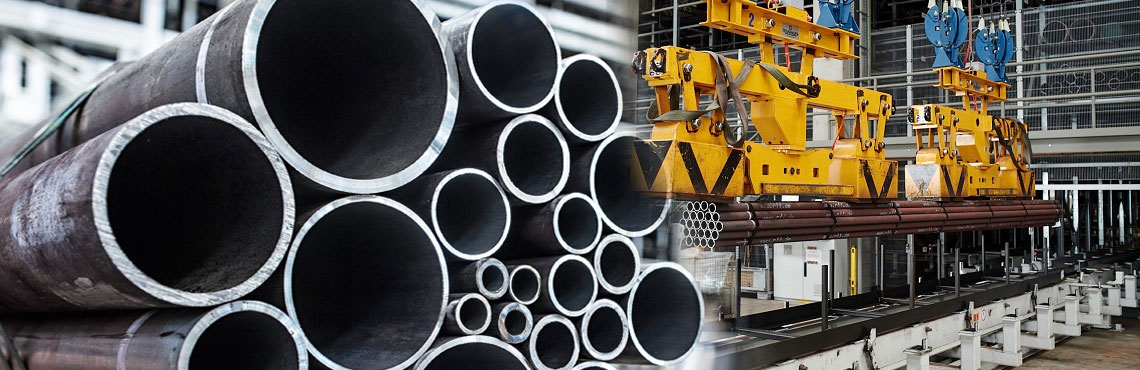
Industrial boiler systems operate under brutal conditions. In power generation and heavy manufacturing, extreme heat and relentless pressure push metallurgy to its absolute breaking point. Pick the wrong piping material, and you risk catastrophic mechanical failures. Incorrect dimensional specifications inevitably lead to costly operational downtime and severe safety hazards for plant personnel.
Modern industrial plants demand a strict engineering balance. Procurement teams and piping engineers must weigh initial material costs against long-term asset longevity and rigid regulatory compliance. This technical guide breaks down exactly how to specify boiler seamless steel pipes based on precise internal pressure and operating temperature limits. Master these underlying metallurgical properties and dimensional calculations, and you will keep your thermal infrastructure running safely and efficiently.
Key Takeaways
Temperature dictates material selection: Standard carbon steel works perfectly for low-to-medium heat applications. High-temperature zones demand alloy steels and austenitic stainless steels to prevent thermal creep and structural deformation.
Pressure dictates wall thickness: High internal steam pressure requires strict engineering calculations. You must determine the correct pipe schedule and minimum wall thickness to prevent violent ruptures.
Standards are mandatory: Every material selection and dimensional specification must strictly adhere to recognized international engineering codes, primarily ASME, ASTM, and EN standards.
Seamless manufacturing is superior: Seamless conduits offer uniform strength and superior pressure resistance compared to welded alternatives. They are the undisputed standard for critical boiler applications.
Industry Trends: The Push for Extreme Thermal Efficiency
Let us look at where the industry is heading. Global power generation is rapidly shifting towards ultra-supercritical and advanced ultra-supercritical technologies. Driven by strict carbon emission targets and the need for higher thermal efficiency, modern plants operate at unprecedented thermal loads. This industry-wide evolution pushes traditional steel boundaries. Facilities now demand advanced metallurgy capable of withstanding steam temperatures exceeding 600 degrees Celsius.
Selecting a reliable heat resistant seamless tube is no longer just about meeting basic specifications. It is about future-proofing your facility against increasingly aggressive operating cycles and ensuring long-term structural integrity under extreme thermodynamic stress.
Understanding the Basics: Why Choose a Boiler Seamless Steel Pipe?
Before diving into complex calculations and material grades, we must establish the foundational role of boiler piping. A boiler tube is a highly durable conduit built to transfer thermal energy into water, ultimately generating high-pressure steam. This steam drives turbines in power plants or provides necessary heat for chemical processing facilities.
When specifying piping for these extreme environments, the debate between seamless and welded manufacturing is settled quickly by pure physics. Welded pipes rely on a rolled steel plate and a longitudinal seam. Modern welding is advanced, but that seam inherently creates a heat-affected zone. Under fluctuating thermal and pressure cycles, the weld seam introduces microscopic weak points and stress concentrations. Picture a supercritical power plant operating at peak load. A microscopic flaw in a weld can rapidly propagate into a full-scale fissure.
Seamless steel pipes are manufactured through an extrusion or rotary piercing process starting from a solid steel billet. The result is a continuous, homogeneous cylindrical structure with zero longitudinal seams. No weld seam means no weak points. Stress distributes perfectly across the entire circumference of the tube. For engineers and procurement managers, investing in seamless technology is the fundamental baseline for safety.
How Temperature Impacts Your Choice of Heat Resistant Materials
Operating temperature is the primary variable dictating your material grade. Exposing metal beyond its design threshold fundamentally alters its metallurgical structure and causes rapid degradation.
The Threat of Thermal Creep and Oxidation
High-temperature boiler zones subject piping to two primary failure mechanisms: thermal creep and oxidation. Creep is a time-dependent, permanent plastic deformation occurring when metal faces constant mechanical stress at elevated temperatures. Even if the applied stress is well below the standard yield strength, prolonged heat causes internal grain boundaries to slide and deform. Without proper alloying to resist this phenomenon, the conduit will eventually bulge and rupture.
High temperatures also accelerate oxidation and scaling. The iron in steel reacts with oxygen and steam to form a thick, brittle iron oxide scale on both internal and external surfaces. This scale acts as a thermal insulator. The boiler furnace must burn hotter to achieve the same steam temperature, which accelerates the degradation of the underlying metal.
Matching Temperature Ranges to Material Types
Engineers must meticulously match the operating temperature of specific boiler zones to the correct material category.
Low to Medium Temperature up to 450 degrees Celsius: In cooler sections like the economizer or water wall panels, standard carbon steel is highly effective and economically viable. Up to this limit, carbon steel maintains excellent tensile strength. Exposing plain carbon steel to higher temperatures for extended periods leads to graphitization, severely embrittling the metal.
High Temperature from 450 to 600 degrees Celsius: Carbon steel fails in superheaters and reheaters. Engineers must specify low-alloy steels formulated with precise additions of Chromium and Molybdenum. Chromium significantly enhances resistance to high-temperature oxidation. Molybdenum increases high-temperature tensile strength and dramatically improves resistance to thermal creep.
Ultra-High Temperature above 600 degrees Celsius: Advanced power plants pushing steam temperatures beyond 600 degrees Celsius require austenitic stainless steels. These materials contain high percentages of Chromium and Nickel, providing unparalleled oxidation resistance at extreme thermal loads.
How Pressure Determines Pipe Dimensions and Wall Thickness
Temperature dictates the chemical composition of the steel, but internal operating pressure dictates the physical dimensions. Specifically, pressure determines the minimum required wall thickness of the tubing.
The Relationship Between Internal Pressure and Stress
High-pressure steam flowing through a system exerts outward radial forces against the internal walls. This creates a mechanical tension known as hoop stress or circumferential stress. Hoop stress attempts to tear the cylinder apart longitudinally. Because a seamless conduit has no weld seam, it handles this uniform stress exceptionally well. However, if the wall is too thin to withstand the exerted pressure, the hoop stress exceeds the material yield strength, resulting in a violent longitudinal rupture.
Calculating Minimum Wall Thickness
Engineers do not guess the required wall thickness. We rely on rigorous mathematical formulas governed by international codes, primarily ASME B31.1 for Power Piping and ASME Boiler and Pressure Vessel Code Section I. The foundational calculation relates internal pressure, allowable stress, outside diameter, and wall thickness. To standardize manufacturing and procurement, the industry utilizes Pipe Schedules ranging from Schedule 40 up to Double Extra Strong. As internal design pressure increases, the required schedule must also increase to safely contain the mechanical load.
Low/Medium vs. High-Pressure Boilers
The operational pressure classification of the facility drastically alters dimensional specifications. Low and medium-pressure boilers operating under 5.88 MPa generally utilize standard schedules like Schedule 40 or 80 and rely heavily on carbon steel grades. Supercritical boilers operating above 22 MPa require heavy-wall piping like Schedule 160 to prevent bursting under immense stress.
Key Material Grades for Power Generation Piping
Navigating the vast array of metallurgical standards is challenging. Procurement managers must understand the most reliable material grades to specify the correct power plant steel pipe for a given application.
Carbon Steel Grades for Standard Pressure
Carbon steel remains the workhorse for industrial applications with tightly controlled temperatures. ASTM A192 is a highly common standard for seamless carbon steel tubes designed specifically for high-pressure heat exchangers. ASTM A210 covers medium-carbon steel superheater tubes offering slightly higher tensile strength. ASTM A106 Grade B and C are standard specifications for high-temperature service mains connecting the boiler to other plant infrastructure.
Alloy Steel Grades for High Pressure and Heat
Pushing into the high-temperature ranges of modern thermal generation makes alloy steels non-negotiable. ASTM A213 T11 and T22 designate tubes typically used inside the furnace casing. Grade T91 is an advanced Chromium and Molybdenum alloy enhanced with Vanadium and Niobium, offering exceptional creep strength. ASTM A335 P11, P22, and P91 mirror these chemical compositions but designate pipes used for larger diameter main steam lines. Grade P91 allows engineers to design thinner-walled systems that reduce thermal fatigue during plant startup and shutdown cycles.
Core Engineering Reference Table
Material Category
Common ASTM Grades
Max Operating Temp
Typical Boiler Application
Carbon Steel
A192, A210, A106 Gr.B
450 degrees Celsius
Economizers, Water Walls, Feedwater Lines
Low-Alloy Steel
A213 T11/T22, A335 P11/P22
580 degrees Celsius
Superheaters, Reheaters, Main Steam Piping
Advanced Alloy Steel
A213 T91, A335 P91
600 degrees Celsius
High-Temp Headers, Supercritical Steam Lines
Austenitic Stainless
A213 TP304H, TP316H
650+ degrees Celsius
Ultra-Supercritical Reheaters, Corrosive Zones
Essential Manufacturing Standards and Specifications
Procuring materials is not merely about selecting a chemical composition. It is about ensuring the manufacturing process adheres to rigid global regulatory standards. Non-compliant piping introduces unacceptable safety and liability risks.
The American Society of Mechanical Engineers and the American Society for Testing and Materials provide the most widely recognized regulatory frameworks globally. ASME BPVC Section I governs the construction rules for power boilers, while ASME B31.1 governs power piping systems. When sourcing a high temperature boiler tube, ensuring it carries the proper certification is critical for passing safety inspections and securing operational insurance.
While ASME and ASTM dominate many international markets, European standards like EN 10216-2 for seamless steel tubes are also heavily utilized depending on the project geographic location and specific engineering requirements.
Top Considerations When Procuring Boiler Tubes
Selecting the correct theoretical grade and schedule is only the first phase. Procurement teams must rigorously vet suppliers to ensure the physical products delivered meet exact metallurgical and dimensional specifications.
Non-Destructive Testing
Visual inspection is entirely insufficient. Imagine receiving a batch of pipes that look flawless on the surface, only to discover micro-fissures during a pressurized startup. Buyers must mandate comprehensive Non-Destructive Testing. Hydrostatic Testing pressurizes the pipe with water beyond its design limit to ensure there are no structural weaknesses. Ultrasonic Testing utilizes high-frequency sound waves to detect internal flaws. Eddy Current Testing employs electromagnetic induction to detect hidden surface defects.
Dimensional Tolerance and Surface Finish
Boiler assembly requires precise welding and intricate fitting. If the outer diameter or wall thickness deviates beyond acceptable limits, it leads to weld misalignment. This creates dangerous stress concentrators. Buyers must verify that the supplier guarantees strict adherence to the dimensional tolerances outlined in relevant standards. The surface finish must also be free from excessive scale, pitting, or deep scratches that could initiate localized corrosion.
Mill Test Certificates
Never accept delivery of pressure vessel components without a certified Mill Test Certificate. An EN 10204 3.1 certificate confirms that the supplied products comply with the order requirements and includes specific test results for chemical composition and tensile strength. Highly critical applications require a 3.2 certificate, meaning the test results are validated by both the manufacturer and an independent third-party inspector. The certificate is your ultimate proof of material traceability.
Conclusion
Choosing the correct seamless steel pipe for your boiler requires a rigorous technical evaluation. You must constantly balance extreme thermal loads with high internal pressures. The operating temperature directly dictates your exact material grade, while the internal pressure calculates the necessary wall thickness for continuous, safe operation.
Cutting corners on material grades or dimensional tolerances leads to disastrous plant failures and severe safety incidents. Always prioritize recognized global manufacturing standards and insist on comprehensive testing documentation. Do not compromise on your industrial piping quality. If you are navigating a complex plant upgrade or a new build, consult with professional engineers to finalize your system specifications. To explore certified piping solutions tailored to your thermodynamic requirements, review the extensive inventory at CZWH Steel and ensure absolute compliance for your next project.
Frequently Asked Questions
What is the maximum temperature for carbon steel boiler pipes?
Standard carbon steel is generally safe to operate up to approximately 425 to 450 degrees Celsius. Beyond this thermal threshold, thermal creep becomes a significant issue. The carbon within the steel can begin to graphitize, leading to severe embrittlement. Alloy steels containing Chromium and Molybdenum are required for temperatures exceeding this limit.
Why is seamless pipe used in boilers instead of welded pipe?
Seamless pipes lack a longitudinal weld seam. In high-pressure and high-temperature environments, a weld seam acts as a potential weak point and a zone for stress concentration. Seamless manufacturing provides a homogeneous grain structure, allowing for perfectly uniform stress distribution across the pipe wall. This drastically reduces the risk of fatigue failure and ruptures.
What is the difference between ASTM A213 and ASTM A335?
Both specifications are highly common for high-temperature applications but serve different structural purposes. ASTM A213 typically covers seamless ferritic and austenitic alloy-steel tubes, which are generally smaller in diameter and used inside the boiler casing for superheaters and reheaters. ASTM A335 covers seamless ferritic alloy-steel pipes, which are typically larger in diameter and used for high-temperature mains and steam transport piping outside the immediate boiler furnace.
How do I know what pipe schedule to choose for my boiler?
The pipe schedule dictates the wall thickness and is determined through strict engineering calculations based on codes like ASME B31.1. It requires calculating the internal design pressure, factoring in the maximum allowable stress of the specific material at the design temperature, and adding necessary allowances for corrosion and manufacturing tolerances. Higher operating pressures naturally mandate higher schedule numbers.
How does pipe schedule affect pressure rating?
The pipe schedule directly defines the physical wall thickness of the conduit. As the schedule number increases for a specific nominal outer diameter, the wall thickness increases. A thicker wall proportionately increases the pipe's ability to contain higher internal radial pressures without yielding or bursting, directly elevating its maximum allowable pressure rating.
What is the required minimum wall thickness for boiler tubes?
The absolute minimum wall thickness is not a single fixed number. It varies entirely based on the specific operating pressure, the tube diameter, and the material allowable stress at the design temperature. Engineers calculate this precise minimum using formulas defined in ASME BPVC Section I, adding necessary safety allowances for structural stability and anticipated corrosion over the lifespan of the plant.
Our forged threaded flanges have undergone strict quality control and testing, with excellent strength and reliability, and can withstand high pressure and harsh working environments.
CONTACT US
Phone:+86-13832718182 Email: sales@czweiheng.com WhatsApp:+86-13832718182 Add:East of Construction Machinery Factory, Yanshan County, Cangzhou, Hebei China