You walk into a mechanical room and hear a distinct, rhythmic rattle. Or perhaps you notice a slow, persistent leak developing along a fluid transport line. More often than not, the root cause is not a defective pipe. The failure originates in the support infrastructure. When industrial or residential piping networks experience mechanical stress, the mounting hardware is almost always the weakest link.
A saddle clamp serves as a critical structural component. These half-round or U-shaped metal brackets are designed to secure lines firmly to floors, walls, or ceilings. While they appear to be straightforward pieces of hardware, the methodology behind their physical application dictates the longevity, safety, and operational efficiency of your entire system.
Field failure analyses tell a harsh truth. Even premium brackets will fail if subjected to improper installation practices. Variables such as torque application, spatial distribution, and thermal dynamics play definitive roles in maintaining system stability. By understanding these objective factors, facility managers and technicians can mitigate the risk of catastrophic system failures and avoid expensive downtime.
Key Takeaways
Torque Calibration is Critical: Over-tightening crushes softer materials and induces stress fractures. Under-tightening leads to destructive vibration and structural wear over time.
Metallurgical Compatibility: Matching the clamp material to the pipe prevents galvanic corrosion. This chemical reaction can rapidly degrade both the support and the plumbing.
Calculated Spacing: Adhering to industry-standard spacing guidelines prevents sagging, uneven weight distribution, and cascading bracket failures.
Thermal Dynamics: A rigid support must account for the natural expansion and contraction of pipes caused by ambient and fluid temperature fluctuations.
Alignment Precision: Maintaining strict center-line alignment ensures that mechanical loads are distributed evenly across the clamp surface area.
The Role of Proper Alignment in Saddle Clamp Installation
Why Center-Line Alignment is Critical
The structural integrity of a support bracket relies entirely on even load distribution. During a professional installation, the pipe must sit perfectly flush within the geometric curve of the bracket. If a technician rushes the job and secures the pipe off-center, the clamp immediately applies asymmetric pressure to the outer wall. This uneven load distribution creates dangerous localized point loads.
Continuous point loading permanently deforms pipes. This is especially true in systems utilizing softer materials like polyvinyl chloride or standard-grade copper. Center-line alignment ensures the compressive radial force exerted by the metal is distributed uniformly across its inner surface. This precision maintains the structural geometry of the pipe under heavy static pressure.
Vertical vs. Horizontal Alignment Challenges
Orientation significantly alters the physical forces acting upon the mounting hardware. Horizontal runs primarily deal with continuous static weight and gravitational pull. In these specific applications, the clamp must support the downward force of the tube, the fluid medium flowing inside, and any heavy exterior insulation.
Conversely, vertical drops face severe axial shear forces. A clamp installed on a vertical axis acts as a high-friction anchor to prevent downward slippage caused by gravity. Misalignment in a vertical setup drastically reduces the contact friction area. This exponentially increases the risk of the pipe sliding through the support and crushing lower junction points.
How Torque and Tightening Pressure Impact Your System
The Dangers of Over-Tightening
Applying excessive torque is a frequent mechanical error that immediately compromises the structural integrity of the piping network. When a plumbing pipe bracket is over-tightened, it exerts compressive forces that exceed the yield strength of the pipe wall. For plastic lines, this manifests as invisible micro-fractures. Under hydrostatic pressure, these fractures eventually propagate into full structural blowouts.
For metallic lines, excessive compression restricts natural thermal movement and creates severe stress concentrations. Furthermore, cranking down too hard easily strips the internal threads of the fasteners or warps the bracket itself. This renders the support useless and requires immediate replacement.
The Risks of Under-Tightening
On the opposite end of the spectrum, insufficient tightening pressure introduces a distinctly different set of mechanical hazards. A loose clamp fails to adequately restrain the pipe during transient flow events. The most notable example is hydraulic shock, commonly referred to as water hammer. When valves close rapidly, kinetic energy transfers directly into the infrastructure and causes high-amplitude vibrations.
Continuous rattling leads to fretting wear. This abrasive process occurs when friction between the loose metal bracket and the pipe physically degrades the pipe wall. Eventually, this movement wears a hole right through the material.
Using the Right Tools
Relying on manual feel or standard hand tools is entirely insufficient for modern building codes. Industry best practices dictate the use of calibrated torque wrenches. These precision tools allow technicians to apply the exact rotational force specified by the manufacturer. This guarantees the hardware is secured safely within engineered operational thresholds.
Installation Error
Mechanical Consequence
Long-Term System Impact
Excessive Torque Application
Micro-fractures and thread stripping
Catastrophic blowouts under hydrostatic pressure
Insufficient Tightening
High-amplitude vibration during hydraulic shock
Fretting wear and eventual pipe wall perforation
Off-Center Alignment
Asymmetric radial pressure
Permanent pipe deformation and flow restriction
Direct Dissimilar Metal Contact
Electrochemical anodic reaction
Rapid galvanic corrosion and bracket fracture
Material Compatibility: Preventing Corrosion in Supports
Understanding Galvanic Corrosion
Material selection is a fundamental aspect of installation that directly impacts system longevity. When two dissimilar metals come into direct physical contact in the presence of an electrolyte, an electrochemical reaction occurs. High ambient humidity or condensation act as perfect electrolytes for this process, known as galvanic corrosion.
For example, bolting a standard bare carbon steel clamp directly onto a copper water line is a critical mistake. The less noble metal acts as an anode and rusts at an accelerated rate. This rapid degradation weakens the structural hold and eventually causes the clamp to fracture entirely under a normal load.
The Role of Rubber Inserts and Coatings
To actively mitigate the destructive risks of galvanic corrosion, engineers often specify an isolated pipe mounting support equipped with elastomeric linings. High-grade EPDM rubber cushions serve a vital dual purpose in modern installations.
First, they act as a dielectric barrier. This completely prevents metal-to-metal contact and halts the electrochemical corrosion process before it begins. Second, the elastomeric material provides critical acoustic dampening. It absorbs operational vibrations and significantly reduces noise transmission through the structural framework of the building.
Matching Clamp Material to the Environment
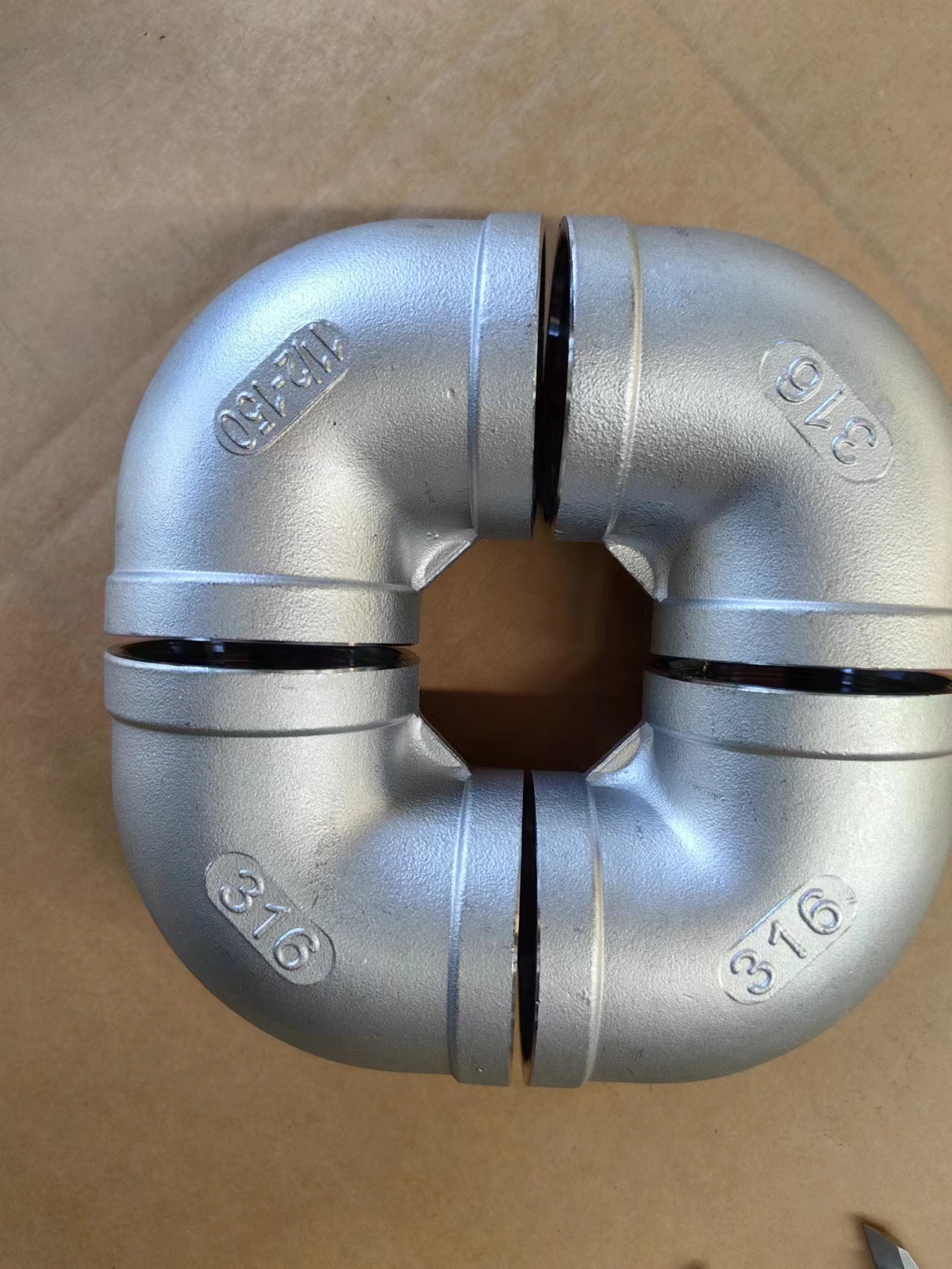
Beyond the pipe itself, the surrounding ambient environment dictates the required metallurgy of the hardware. For highly corrosive environments like marine applications or chemical processing plants, 316-grade stainless steel is strictly necessary due to its high resistance to oxidation. In contrast, standard climate-controlled indoor plumbing operates perfectly well with zinc-plated or galvanized steel, which provides excellent durability and cost-efficiency.
Spacing and Load Distribution for System Stability
Calculating the Weight Load
Proper installation requires precise mathematical calculation of the total weight load. An HVAC pipe clamp must support significantly more than just the empty weight of the tube. Engineers must diligently account for the dynamic mass of the fluid or dense refrigerant inside. Furthermore, the added bulk of thermal insulation and the external forces generated by connected compressors must be factored into the load rating.
A major shift is currently transforming commercial construction standards. There is a distinct industry pivot toward seismic-rated, engineered support systems. As building codes become increasingly stringent regarding acoustic transmission and earthquake resilience, contractors are abandoning ad-hoc spacing methods. Modern facilities now require dynamic load calculations using 3D modeling software before a single bracket is mounted. This evolution ensures absolute precision in load distribution and vibration isolation.
Industry Standards for Support Spacing
Adhering to established spacing standards published by organizations like the Manufacturers Standardization Society is non-negotiable for safety. The required distance between anchor points is dictated by the material composition and physical diameter. Flexible materials require supports at much closer intervals to prevent bowing. Rigid carbon steel lines, however, can safely span much greater distances without compromising their structural linearity.
The Domino Effect of Poor Spacing
When engineering spacing guidelines are ignored, pipes inevitably begin to sag. In drainage systems, this creates low points where fluids pool. In HVAC systems, sagging forms air traps that severely disrupt thermodynamic efficiency. More critically, if a single bracket fails due to an excessively wide span, the heavy load immediately transfers to the adjacent clamps. This sudden surge in stress often exceeds the yield strength of the neighboring supports, leading to a dangerous cascading structural collapse.
Accounting for Thermal Expansion and Contraction
How Temperature Changes Affect Pipes
Piping networks are dynamic entities that respond constantly to thermal fluctuations. All materials naturally expand when heated and contract when cooled. In hot water distribution lines or steam circuits, this dimensional change is substantial. Over a long straight run of piping, a moderate temperature change can cause several inches of linear expansion. If the hardware does not accommodate this movement, the kinetic energy transforms directly into mechanical stress.
Rigid vs. Flexible Clamping
Installation technicians must strategically determine whether a specific bracket should function as a rigid anchor or a flexible guide. Anchor points are tightened securely to completely restrict movement. This forces thermal expansion to direct itself toward engineered expansion loops. Guide points secure the pipe radially but are installed with calculated tolerances. This precise gap allows the tube to slide axially along its length as it expands.
Preventing Friction Wear
Picture a long run of hot copper piping expanding against a poorly installed, unlined metal clamp. The resulting friction acts like a slow-moving saw. Over years of continuous thermal cycling, this abrasive movement will literally wear a groove into the exterior wall. Utilizing low-friction polymer inserts ensures safe thermal movement without compromising the structural boundary of the system.
Surface Preparation and Structural Integrity
Assessing the Mounting Surface
The most robust bracket in the world is entirely useless if the surface it is mounted to cannot bear the load. Before drilling begins, the structural integrity of the wall or ceiling must be objectively evaluated. Mounting a heavy, fluid-filled cast iron drain to standard half-inch drywall will result in immediate tear-out. The substrate must be solid concrete, structural steel beams, or reinforced wooden studs capable of handling dynamic vibrations.
Choosing the Right Fasteners
A support system is only as strong as the fastener securing it to the substrate. The selection of screws, bolts, or anchors must match the mounting surface perfectly. Concrete requires heavy-duty wedge anchors. Steel beams necessitate high-tensile machine bolts. Wooden joists require deep-penetrating lag screws to ensure maximum pull-out resistance.
Dealing with Uneven Surfaces
Industrial environments rarely feature perfectly flat walls. Installing a bracket on an uneven brick facade creates a severe torque imbalance. To ensure the hardware sits flush, installers should utilize metal shims or mount a galvanized strut channel to the wall first. This technique creates a perfectly level, plumb baseline upon which multiple clamps can be securely attached.
Common Installation Mistakes That Ruin Performance
Skipping the Insulation Protection
In refrigeration systems, clamping directly onto the pipe and crushing the surrounding insulation is a critical error. Compressing foam or fiberglass destroys its internal cellular structure, which drastically reduces its insulating value. This creates a thermal bridge where condensation forms, leading to localized water damage. To prevent this, rigid insulation saddles or protective metal shields must be installed between the pipe and the bracket.
Mixing Up Clamp Sizes
Precision is paramount when selecting hardware dimensions. Using a clamp that is even a fraction of an inch too large fails to secure the line properly, inviting vibration. Forcing a bracket that is too small onto a pipe will score the outer diameter and create immediate stress fractures. Installers must carefully verify the exact physical outer diameter, noting that nominal pipe sizes often differ from actual measurements.
Ignoring Manufacturer Guidelines
Every piece of mounting hardware is engineered with specific load ratings, temperature tolerances, and torque specifications. Ignoring these documents in favor of generic installation habits compromises the safety of the entire facility. Strict adherence to provided guidelines is required to satisfy commercial building codes, maintain liability warranties, and ensure peak performance.
Conclusion
A saddle clamp is a highly engineered device that requires precision installation to function as intended. Correct alignment and proper torque application prevent mechanical failures. Matching materials stops galvanic corrosion in its tracks. Furthermore, adhering to standard spacing rules and accounting for thermal expansion ensures optimal structural safety over the lifespan of the building.
Taking the time to calculate load distribution, use calibrated tools, and select the correct environmental materials saves thousands of dollars in emergency maintenance. Facility managers and contractors should consistently evaluate their current setups and source high-quality, application-specific hardware to prevent unexpected system breakdowns.
Stop leaving your system's reliability to chance. Whether you need vibration-dampening EPDM-lined clamps for an HVAC upgrade or 316 stainless steel brackets for a corrosive industrial environment, selecting the right engineered support is your first line of defense. Evaluate your project requirements today and explore professional-grade piping support solutions at czwhsteel.com to secure your infrastructure the right way.
Frequently Asked Questions
How far apart should saddle clamps be placed?
Spacing depends entirely on the pipe material and its diameter. Flexible materials like polyvinyl chloride require supports at much closer intervals, often every 3 to 5 feet, to prevent sagging. Rigid materials like carbon steel or copper can span greater distances, up to 8 to 10 feet. You should always consult local building codes and manufacturer specifications for exact measurements.
Can I use a metal saddle clamp on a plastic pipe?
Yes, you can use metal hardware on plastic piping. However, it is highly recommended to use a clamp equipped with a rubber cushion or EPDM lining. Bare metal edges easily gouge, scratch, or crack softer plastic materials during normal thermal expansion and contraction cycles.
What is the difference between a saddle clamp and a U-bolt?
A saddle clamp generally features a flat base that mounts directly to a flat surface, holding the pipe securely in a half-circle cradle. A U-bolt is a threaded U-shaped rod typically used to secure pipes to a suspended strut channel or steel beam. U-bolts often require nuts and washers on both ends to lock the pipe in place.
How tight should an HVAC pipe clamp be?
It should be snug enough to hold the line securely and prevent operational vibration. It must not be so tight that it crushes the pipe wall, damages the exterior insulation, or completely restricts natural thermal expansion. Installers should always use a calibrated torque wrench and refer to the specific torque settings provided by the hardware manufacturer.
How do saddle clamps prevent acoustic transmission in buildings?
Standard bare metal clamps transfer fluid vibration directly into the wall studs or concrete, creating a hum throughout the building. By utilizing saddle clamps equipped with thick EPDM rubber linings, the rubber acts as an acoustic isolator. It absorbs the kinetic energy of the vibrating pipe before it can reach the building's structural framework, ensuring a quiet environment.
What is the best material for outdoor saddle clamps?
For outdoor installations exposed to rain, UV rays, and fluctuating temperatures, corrosion resistance is the top priority. Hot-dipped galvanized steel is a cost-effective choice for general outdoor use. However, for maximum longevity, especially in coastal or industrial environments, 316-grade stainless steel is the superior choice due to its exceptional resistance to rust and chemical degradation.
Our forged threaded flanges have undergone strict quality control and testing, with excellent strength and reliability, and can withstand high pressure and harsh working environments.
CONTACT US
Phone:+86-13832718182 Email: sales@czweiheng.com WhatsApp:+86-13832718182 Add:East of Construction Machinery Factory, Yanshan County, Cangzhou, Hebei China