Selecting improper pipeline components frequently causes dangerous pressure drops, hazardous leaks, and costly unplanned downtime. Modern industrial systems demand exact component matching to operate safely under immense continuous stress. When dealing with high-pressure, non-corrosive fluid transport, carbon steel stands out as an exceptional pipeline choice. It consistently delivers the highest tensile-strength-to-cost ratio available on the market today. However, you must carefully respect specific operational boundaries and environmental limits to prevent premature material degradation. This article equips procurement engineers and project managers with a robust, actionable technical evaluation framework. We will explore how to confidently specify pipeline parts. You will discover practical methods to evaluate your components based on complex geometry, secure connection types, and rigorous global compliance standards. By following this guide, you will gain the clarity necessary to optimize safety, minimize operational risks, and procure the exact components your facility requires.
Key Takeaways
Carbon steel components deliver optimal durability for high-temperature and high-pressure industrial applications where internal corrosion is controlled.
Selecting among different pipe fittings types requires matching flow-control needs (e.g., a carbon steel elbow for directional shifts) with the correct connection method (butt-weld, socket-weld, or threaded).
Verifying ASTM A234 fittings compliance and requiring Mill Test Reports (MTRs) are non-negotiable steps for mitigating supply chain risk and ensuring systemic integrity.
The Role of Carbon Steel in Industrial Pipeline Fittings
Carbon steel serves as the foundational material for most heavy-duty fluid transport systems. Its popularity stems from a unique combination of physical properties. High yield strength allows these components to endure immense internal pressures without deforming. Excellent impact resistance protects the pipeline from sudden physical shocks or water hammer events. Furthermore, carbon steel offers a significantly lower material cost compared to stainless steel or specialized duplex alloys. Engineers rely on it to build extensive infrastructure while keeping project budgets viable.
Ideal Deployment Scenarios
You will frequently see carbon steel deployed in demanding environments. Common applications include high-temperature processing units, superheated steam lines, and complex oil and gas transport networks. Commercial structural applications also utilize these robust materials. Carbon steel performs exceptionally well at elevated temperatures. Standard grades safely operate in environments reaching up to 800°F (427°C), making them indispensable for power generation and petroleum refining.
Transparent Limitations: The Skeptic’s Lens
Despite its impressive strength, carbon steel has distinct vulnerabilities. It remains highly susceptible to oxidation and rapid corrosion when exposed to moisture or aggressive chemicals. Unprotected carbon steel will rust quickly, compromising system integrity.
Best Practice: Mitigating Corrosion
To deploy carbon steel safely in corrosive media or harsh exterior environments, you must implement protective measures. Industry standards dictate using robust surface coatings like hot-dip galvanization, black oxide, or fusion-bonded epoxy. For subterranean pipelines, engineers heavily rely on continuous cathodic protection systems to prevent electrochemical degradation.
Core Pipe Fittings Types: Functions and Flow Dynamics
Designing an efficient pipeline requires you to select the precise geometry for your fluid dynamics. Understanding the varied pipe fittings types ensures your system maintains optimal flow velocity while minimizing internal wear.
Directional Control: Carbon Steel Elbow
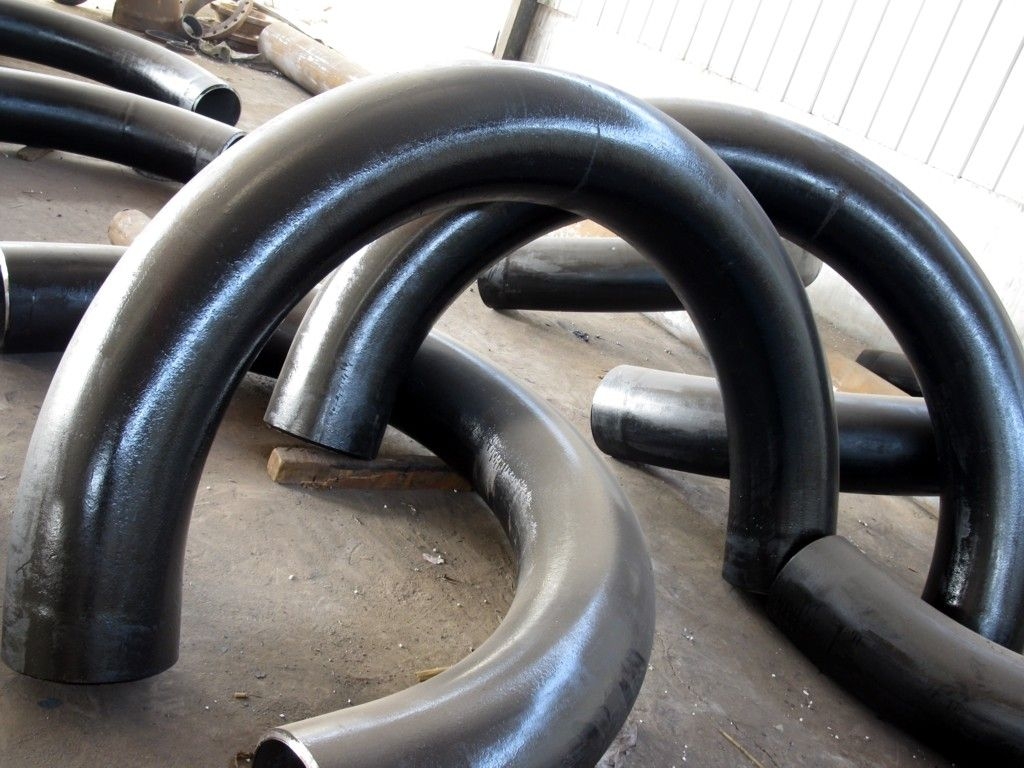
Pipelines rarely run in straight lines. A carbon steel elbow smoothly changes fluid direction while minimizing turbulence. You will typically specify either 45-degree or 90-degree variants based on the routing requirements.
Long Radius (LR): The centerline radius equals 1.5 times the nominal pipe diameter. LR elbows reduce frictional resistance and prevent severe pressure drops. They represent the default choice for most process piping.
Short Radius (SR): The centerline radius matches the nominal pipe diameter perfectly. SR elbows fit into tight spatial constraints. However, they significantly increase flow resistance and accelerate internal erosion.
Branching and Distribution: Tees and Crosses
When you need to split or merge flow, tees and crosses become essential.
Equal Tees: Distribute fluid at the same pipe diameter, maintaining a consistent volume across all branches.
Reducing Tees: Step down the pipe diameter for secondary lines. This helps control downstream pressure.
Crosses: Connect four separate pipes. Crosses represent critical high-stress points in any system. They require careful pressure calculation and robust reinforcement to prevent catastrophic rupture.
Flow Alteration: Reducers
Reducers seamlessly transition a pipeline from a larger diameter to a smaller one.
Concentric Reducers: These maintain a shared centerline between the two connected pipes. They provide ideal fluid dynamics for vertical lines.
Eccentric Reducers: These feature one flat side. You must use eccentric reducers in horizontal lines. Installing them with the flat side facing down prevents fluid pooling. Installing them with the flat side facing up prevents dangerous vapor lock.
System Closure: Caps and Plugs
You need caps and plugs to create permanent or semi-permanent seals at pipe ends. Engineers evaluate these components based on future expansion needs. Plugs offer easier removal for future line extensions, while welded caps provide maximum pressure retention for permanent dead-ends.
Common Pipeline Components Summary
Component Type
Primary Function
Key Design Consideration
Elbow
Changes flow direction
Select LR for flow efficiency, SR for tight spaces
Tee / Cross
Branches or merges flow
Requires careful internal stress analysis
Reducer
Alters pipe diameter
Use Eccentric for horizontal lines to avoid vapor lock
Cap / Plug
Seals the pipeline end
Welded caps for permanence, threaded plugs for expansion
Connection Frameworks: Matching Installation to Application Risk
Choosing the correct geometry only solves half the engineering problem. You must also determine the safest and most efficient connection method. Connection frameworks dictate structural integrity, installation speed, and long-term maintenance requirements.
Butt-Weld Connections
Butt-welding joins the fitting directly to the pipe by melting the two ends together. You specify this method for high-pressure and critical industrial pipeline fittings.
Pros: Butt-welding provides the strongest, most leak-proof joint available. It creates a completely smooth internal flow path, eliminating areas where debris could accumulate.
Cons: This method requires highly skilled welders and significant installation time. You must also conduct costly non-destructive testing (NDT), such as x-ray radiography, to verify weld integrity.
Socket-Weld Connections
Socket-weld fittings feature a recessed area where the pipe simply slips in before welding. Engineers commonly use them for small-bore piping (typically under 2 inches) transporting toxic or flammable fluids.
Pros: The socket design allows for much faster alignment than butt-welding. Welders avoid the risk of weld spatter entering the pipeline interior.
Cons: Installers must leave a small expansion gap at the base of the socket. In specific chemical environments, this gap traps fluid and accelerates severe crevice corrosion.
Threaded Connections
Threaded fittings screw directly onto threaded pipe ends. You will typically find them in low-pressure utility lines moving water or compressed air.
Pros: Installers can assemble threaded systems rapidly without requiring hot work permits or specialized welding equipment. They allow for easy disassembly and frequent maintenance.
Cons: Threads introduce a high risk of micro-leaks, especially under constant vibration or thermal cycling. You should never use threaded connections for hazardous, toxic, or highly pressurized media.
The industrial sector relies on strict standardization to prevent catastrophic failures. You cannot select materials based on assumptions. Relying on verified global standards ensures structural predictability.
Understanding the ASTM A234 Standard
The ASTM A234 standard serves as the definitive specification for wrought carbon steel and alloy steel fittings. It specifically governs components designed for moderate and high-temperature service. Specifying authentic ASTM A234 fittings guarantees the material will perform safely under intense thermal stress.
Grade WPB Significance
Within the ASTM A234 specification, Grade WPB dominates the market. You decode this acronym easily: "W" stands for Weldable, "P" stands for Pipe, and "B" designates the minimum yield strength. WPB represents the most universally specified grade for both seamless and welded pipeline construction. It offers optimal weldability without requiring exotic pre-heating procedures.
Compliance & Traceability Validation
Procuring fittings requires rigorous verification protocols. You must implement strict quality control checks before accepting any component into your facility.
Visual Inspection Criteria: Inspectors must verify the complete absence of surface defects, cracks, or mechanical gouges. They must also confirm uniform wall thickness across the entire fitting body.
Heat Treatment Verification: The forging process introduces immense mechanical stress. You must verify that the manufacturer performed the correct post-forging heat treatments (like normalizing) to relieve these internal stresses.
Total Material Traceability: Modern safety standards demand 100% material traceability. Ensure every fitting features stamped heat codes. You use these codes to cross-reference the physical item with its corresponding Mill Test Report (MTR).
Procurement engineers face thousands of sizing and material combinations. Streamlining your selection process prevents costly installation delays. Use this precise decision framework to specify your components.
Step 1: Define the System Parameters
Begin by mapping the exact maximum operating pressure and extreme temperature ranges. Analyze the precise chemical composition of the transported fluid. You must confirm that standard carbon steel remains viable over more expensive stainless steel or specialized alloy alternatives. If the fluid contains high levels of hydrogen sulfide, for example, standard carbon steel will fail prematurely.
Step 2: Determine Pipe Schedule and Sizing
Wall thickness consistency dictates system safety. Ensure the wall thickness (the "Schedule") of your chosen fitting exactly matches the adjoining pipe. Common designations include Schedule 40, Schedule 80, and Schedule 160. Mismatched schedules create structural weak points and severe internal flow disruption. A thicker Schedule 80 fitting connected to a thinner Schedule 40 pipe will create a harmful internal ridge.
Step 3: Supplier Verification and Shortlisting
Never treat pipeline components as simple commodities. Evaluate your supplier's inherent quality control processes thoroughly.
Evaluate QA/QC Processes: Does the supplier proactively provide ISO certifications? Do they include EN 10204 3.1 Mill Test Reports by default, or do you have to fight for them?
Assess Inventory Depth: Can the supplier provide matching flanges, high-pressure valves, and adjoining pipes? Partnering with a vendor offering deep inventory prevents compatibility issues and logistical bottlenecks.
Next-Step Action
Stop sending generic pricing inquiries. Instead, initiate a detailed Request for Quote (RFQ). Explicitly request physical dimensional tolerances, comprehensive non-destructive testing (NDT) records, and exact surface coating specifications. Detailed RFQs filter out substandard suppliers immediately.
Conclusion
Specifying the right carbon steel fittings represents a crucial exercise in balancing structural demands against installation realities. You must navigate complex geometry, select the safest connection methodology, and verify chemical compatibility. Relying strictly on proven ASTM standards effectively mitigates the risks of catastrophic system failure. By enforcing strict traceability through MTRs and matching pipe schedules perfectly, you protect your facility from unplanned downtime.
Take the guesswork out of your next procurement cycle. Submit your project’s technical specifications or piping and instrumentation diagrams (P&ID) today. Our engineering team will provide a compliance-reviewed quote and expert consultation tailored to your exact industrial requirements.
FAQ
Q: What is the difference between seamless and welded carbon steel fittings?
A: Manufacturers extrude seamless fittings from a single, solid piece of steel. This eliminates seam vulnerabilities, offering higher pressure thresholds. Conversely, manufacturers form welded fittings from rolled steel plates and weld the seam. Welded fittings offer excellent cost-efficiency for larger pipeline diameters but require rigorous non-destructive seam testing to ensure safety.
Q: Can carbon steel pipe fittings be used for water lines?
A: Yes, but you must apply proper internal protection. Unprotected carbon steel interacts with water to cause rapid rust and scale buildup. This corrosion restricts flow and contaminates the water supply. You must utilize internal epoxy coatings, cement linings, or heavy galvanization to deploy them safely in water applications.
Q: What does "Schedule" mean in pipe fittings?
A: "Schedule" defines the exact wall thickness of the pipe or fitting. A higher schedule number, such as Schedule 80 compared to Schedule 40, indicates a much thicker metal wall. Thicker walls grant higher pressure capacity but naturally result in a smaller internal diameter for the fluid path.
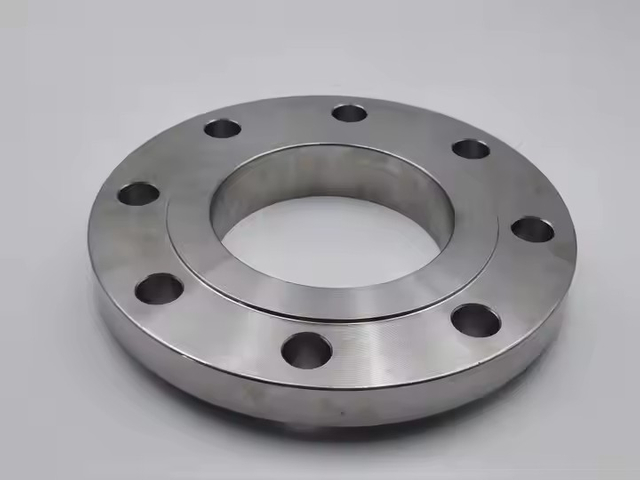
Our forged threaded flanges have undergone strict quality control and testing, with excellent strength and reliability, and can withstand high pressure and harsh working environments.
CONTACT US
Phone:+86-13832718182 Email: sales@czweiheng.com WhatsApp:+86-13832718182 Add:East of Construction Machinery Factory, Yanshan County, Cangzhou, Hebei China