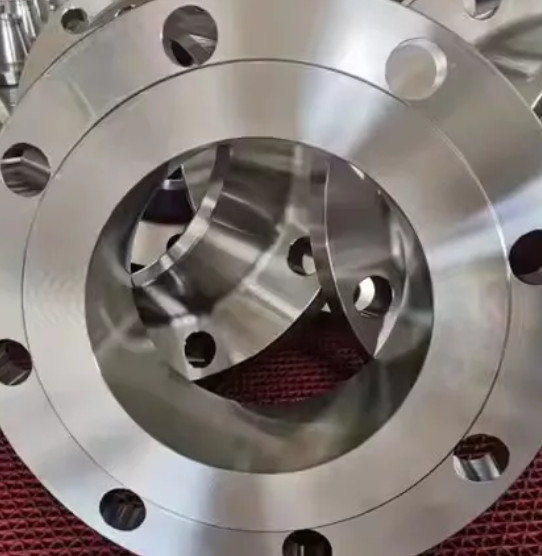
Flanges are crucial in piping systems, ensuring secure, leak-proof connections. But getting the right flange size is essential to prevent misalignment and leaks. In this article, we’ll guide you through the steps to accurately measure flange size, discuss the key dimensions to consider, and provide tips on avoiding common mistakes. With the right tools and techniques, you’ll ensure a perfect fit every time.
Key Flange Dimensions to Measure
When measuring a flange, there are several key dimensions you need to focus on to ensure proper fit and performance. Here are the most important ones:
Nominal Pipe Size (NPS)
The Nominal Pipe Size (NPS) is a critical dimension because it defines the flange's compatibility with the connected pipe. To measure NPS, you need to determine the outer diameter (OD) of the flange.
How to Measure OD:
● Use a caliper or measuring tape to measure the full outer diameter of the flange at its widest point, including any raised edges.
● Check the measurement against standard specifications (ASME, DIN, or JIS) to confirm the NPS. For example, a 4-inch NPS flange typically has an OD of around 4 inches.
This dimension ensures that the flange fits properly onto the pipe, preventing leaks or misalignment.
Bolt Circle Diameter (BCD)
The Bolt Circle Diameter (BCD) refers to the diameter of the circle passing through the centers of all bolt holes. It's one of the most crucial measurements for ensuring that bolts fit properly and the flange aligns with the connected components.
How to Measure BCD:
● For flanges with an even number of bolt holes, measure from the center of one hole to the center of the opposite hole.
● For odd-numbered holes, measure from the center of one hole to the nearest adjacent hole and apply standard BCD formulas to check the measurement.
● Repeat the measurement at different points around the flange to ensure accuracy.
If the BCD is off, the bolts won’t align properly, which can cause leaks or difficulty during installation.
Bolt Hole Diameter & Quantity
The diameter and quantity of bolt holes determine how well the bolts will fit into the flange. These dimensions are standardized for each flange size and pressure class.
How to Measure Bolt Hole Diameter:
● Use a caliper to measure the inner diameter of one bolt hole. Take the average of two or three measurements to account for any minor manufacturing tolerances.
● Count the total number of bolt holes. Ensure this matches the flange’s pressure class and the connection system requirements.
Bolt Hole Quantity:
● Flanges of different sizes and pressure ratings have a set number of bolt holes. Be sure the number matches the flange’s specifications.
Incorrect hole diameter or number can prevent the flange from fitting the system, leading to leaks or assembly issues.
Flange Thickness (Body Thickness)
The flange thickness is essential because it determines the flange’s ability to handle pressure. Thicker flanges can withstand higher pressures without failure. Measuring the thickness accurately ensures the flange will perform as required in its specific application.
How to Measure Thickness:
● Measure the flange's thickness from the sealing surface (raised or flat) to the back of the flange body. Avoid any protruding features or irregularities that could skew the measurement.
● Take measurements at 3-4 points around the flange to ensure uniformity and account for manufacturing variations.
This dimension helps you choose the right flange for high-pressure systems, as thicker flanges are typically used for more demanding applications.
Sealing Surface Dimensions
The sealing surface is where the flange contacts the gasket. Its dimensions and smoothness are crucial for creating a leak-proof seal. Flanges can have either a raised face or a flat face, and each has its own method of measurement.
How to Measure Sealing Surface:
● For Raised Faces: Measure both the height and the outer diameter of the raised portion. The height is critical for gasket compression and sealing performance.
● For Flat Faces: Measure the overall contact area. Ensure the surface is smooth, as imperfections can prevent the gasket from forming a proper seal.
Proper sealing surface dimensions ensure that the flange and gasket fit together tightly, avoiding leaks and ensuring system integrity.
Dimension | How to Measure | Importance |
Nominal Pipe Size (NPS) | Measure the outer diameter (OD) of the flange. | Ensures flange matches pipe size. |
Bolt Circle Diameter (BCD) | Measure from the center of one bolt hole to the opposite hole. | Ensures bolts fit and flange aligns. |
Bolt Hole Diameter | Measure the inner diameter of one bolt hole. Count the holes. | Guarantees proper bolt and gasket fit. |
Flange Thickness | Measure from the sealing surface to the back of the flange. | Determines pressure-bearing capacity. |
Sealing Surface | Measure the height and diameter of raised face or flat face. | Ensures proper gasket fit for sealing. |
Tip: By accurately measuring these dimensions, you can ensure that your flange fits properly, creating a secure and leak-proof connection in your piping system.
Step-by-Step Measurement Process
Accurate flange measurement is crucial for ensuring a proper fit and leak-proof seal. Here’s a simple, step-by-step process to follow to measure your flange correctly:
Preparing the Flange
Before you start measuring, it's important to prepare the flange properly. A clean flange ensures more accurate measurements and avoids any interference from dirt or debris.
How to Prepare the Flange:
● Clean the flange: Use a cloth to wipe down the surface, removing any rust, dirt, or grime. Any debris could distort your measurements.
● Place the flange on a flat surface: Ensure the flange is lying flat and stable. This will help avoid any uneven measurements.
● Check for warping: Inspect the flange for any signs of warping. Warped flanges can lead to inaccurate measurements and improper sealing.
Proper preparation is key to getting the right measurements and ensuring a smooth installation process.
Measuring Outer Diameter (OD)
The outer diameter (OD) is one of the most important measurements. It determines the compatibility of the flange with the pipe, so it’s essential to get this right.
How to Measure OD:
● Align the caliper or measuring tape: Position your tool across the exact center of the flange to measure the full outer diameter.
● Avoid angled measurements: Ensure the measurement is taken straight across the flange to avoid any distortion. A skewed measurement will lead to an incorrect OD.
● Measure at multiple points: It’s good practice to take a few measurements around the flange to ensure the OD is consistent. This is especially important if the flange isn’t perfectly circular.
Getting an accurate OD is crucial for ensuring the flange fits the pipe correctly, so take your time with this step.
Determining Bolt Circle Diameter (BCD)
The Bolt Circle Diameter (BCD) is another critical dimension. It ensures that the bolt holes are properly aligned, so bolts fit in correctly.
How to Measure BCD:
● For flanges with even hole counts: Use a caliper to measure from the center of one bolt hole to the center of the directly opposite hole. This measurement will give you the BCD.
● For flanges with odd hole counts: You’ll need to measure from the center of one hole to the center of the nearest adjacent hole. Then, apply standard BCD formulas to verify the diameter.
● Repeat measurements: To ensure accuracy, measure the BCD at two or three points around the flange. This helps identify any inconsistencies that may cause misalignment.
If the BCD is off, the bolts won’t align properly during installation, which can lead to leaks or difficulty fitting the bolts.
Measurement | How to Measure | Importance |
Outer Diameter (OD) | Measure the full diameter across the flange’s widest point. | Ensures compatibility with the pipe. |
Bolt Circle Diameter (BCD) | Measure from the center of one bolt hole to the opposite hole (or nearest hole for odd counts). | Ensures proper alignment for bolt installation. |
Bolt Hole Diameter | Use a caliper to measure the inner diameter of each bolt hole. | Determines compatibility with bolts and gaskets. |
By following these steps carefully, you can ensure accurate flange measurements and a secure, leak-proof connection. Remember, each measurement plays a key role in the overall success of the flange installation.
Common Measurement Mistakes to Avoid
When measuring for flange size, precision is key. Even small errors can lead to misalignments, leaks, or installation problems. Here are some common mistakes to avoid during the measurement process:
Ignoring Tolerances
Flanges, like most mechanical components, have manufacturing tolerances. These tolerances allow for slight variations in size, but failing to account for them can lead to fitting issues. It’s essential to understand the acceptable tolerance ranges for each measurement to avoid misalignment.
How to Account for Tolerances:
● Check specifications: Always refer to the flange standards (ASME, DIN, etc.) to understand the acceptable tolerance for each dimension.
● Use average measurements: When measuring bolt holes or diameters, take multiple readings and calculate the average to account for small variations.
● Allow for slight deviations: A tolerance range (e.g., ±0.5mm for OD) means small variations are normal, but large discrepancies could affect flange performance.
Ignoring tolerances can cause bolts not to fit properly or lead to gaps in the gasket, potentially causing leaks.
Measuring Angled BCD
The Bolt Circle Diameter (BCD) must be measured accurately for bolts to align correctly. Measuring an angled BCD is one of the most common mistakes, especially for flanges with an odd number of bolt holes. If you don’t measure straight across, your bolts won’t line up, which can lead to installation difficulties.
Risks of Angled BCD Measurements:
● Incorrect bolt placement: If the BCD is measured at an angle, the holes may not line up with the bolts, making installation impossible.
● Leakage: Misalignment of bolt holes can prevent a proper seal, leading to leaks.
How to Ensure Accuracy:
● Measure from center to center: For even-hole flanges, measure directly across from the center of one hole to the opposite center. For odd holes, use the center finder tool to mark the middle and then measure accurately.
● Use multiple points: Take measurements from different locations around the flange to ensure consistency. This is particularly important for larger flanges where slight variations can be more noticeable.
Ensuring that BCD is measured properly is essential for a smooth installation process. Misalignment can cause delays or damage to both the flange and the connected components.
Overlooking Sealing Surface Dimensions
The sealing surface is critical in achieving a leak-proof connection. Many overlook the importance of measuring the raised face height or checking the flatness of the sealing surface. An improper sealing surface can lead to gasket compression issues and, ultimately, leaks.
Importance of Checking Sealing Surface Dimensions:
● Raised face height: If the raised face is too high or too low, it won’t provide a proper seal, which can cause the gasket to fail.
● Flat face: For flat-faced flanges, it’s crucial to check that the surface is smooth. Any roughness or irregularities will prevent a proper seal and could lead to leaks.
● Correct gasket fit: The sealing surface dimensions must match the gasket’s design to create a perfect seal. If the flange dimensions are off, the gasket may not compress properly.
How to Measure Sealing Surface Dimensions:
● Measure raised face height: Use a caliper or micrometer to measure the height of the raised portion. Make sure it’s within the acceptable range specified in the flange standards.
● Check flat face smoothness: Use a straightedge or feeler gauge to check for smoothness. If there’s any irregularity, it could affect the gasket’s ability to form a tight seal.
A proper sealing surface ensures that the flange and gasket work together to prevent leaks. Ignoring this detail can lead to significant performance issues.
Flange Standards and Specifications
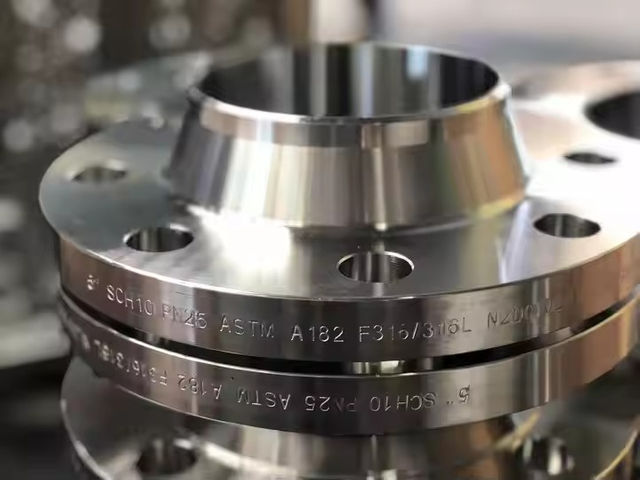
When measuring flanges, it’s important to know how to align your measurements with the proper industry standards. These standards ensure that flanges are built to precise dimensions, making them compatible with other components in the piping system. Two major flange standards that you should familiarize yourself with are ASME and DIN.
Cross-Referencing with ASME and DIN
ASME (American Society of Mechanical Engineers) and DIN (Deutsches Institut für Normung) are two of the most common standards used to define flange dimensions and ensure uniformity. Cross-referencing your flange measurements with these standards ensures that the flange you’ve measured will fit with other system components.
How to Match Your Flange Measurements to ASME and DIN Standards:
● ASME Standards: ASME B16.5 is the most common standard for flanges used in piping systems. It defines the dimensions for different flange sizes, materials, and pressure ratings. When measuring a flange, always refer to ASME B16.5 for the correct dimensions and tolerances.
● DIN Standards: DIN flanges are primarily used in European systems and follow different dimensional standards. Flanges under DIN standards (such as DIN 2573 or DIN 2501) have slightly different tolerances and dimensions compared to their ASME counterparts.
● Compare Key Dimensions: Ensure that the measurements of your flange—such as outer diameter, bolt circle diameter, bolt hole size, and flange thickness—align with the specifications for the flange type, pressure class, and material grade listed in the standards.
Cross-referencing your flange with the right standard ensures it will work seamlessly with your other system components, avoiding issues like misalignment or improper pressure handling.
Standard Variations Across Different Flange Types
Flange dimensions can vary widely depending on the pressure rating, material type, and intended application. Understanding these variations is crucial to selecting the right flange for your project.
Differences in Flange Measurements Across Pressure Ratings and Materials:
● Pressure Ratings: Flanges come in different pressure ratings, such as 150, 300, 600, or even up to 2500. As the pressure rating increases, so does the thickness of the flange body. Higher pressure ratings require thicker flanges to ensure they can withstand the pressure without failure. For example, a flange rated for 2500 psi will be thicker than one rated for 150 psi.
● Material Differences: Flanges made from different materials (such as carbon steel, stainless steel, or alloys) will have different dimensional tolerances and design requirements. Stainless steel flanges, for instance, are more commonly used in corrosive environments and may have slightly different specifications compared to carbon steel flanges.
● Flange Type: There are also different types of flanges, such as weld neck, slip-on, threaded, and blind flanges. Each of these types has unique dimensional specifications based on its design. For instance, a weld neck flange has a longer neck, which helps in providing better alignment and support, while a slip-on flange is easier to install but may not be suitable for high-pressure systems.
It’s important to refer to the correct standard for your flange’s material and pressure rating to ensure it meets the system’s requirements and performs as expected. Even slight dimensional differences can cause issues in a high-demand system, so understanding these variations is key.
Comparing Flanges to Other Connection Methods
When selecting the right connection method for your piping system, you have several options to choose from. Two common alternatives to flanges are threaded joints and welded joints. Each method has its own set of advantages and drawbacks, depending on your application. Let's compare these options in terms of installation flexibility, leak-proof reliability, and pressure suitability.
Flanges vs. Threaded Joints
Threaded joints and flanges are both widely used in piping systems, but they differ in several key areas. Threaded joints are simpler and quicker to install, but flanges offer more flexibility and reliability, especially in high-pressure systems.
Comparison of Installation Flexibility:
● Threaded Joints: These are easy to install, as you simply screw the components together. This makes them ideal for smaller systems or situations where you need to quickly assemble and disassemble pipes.
● Flanges: Installation takes a bit more time because it requires aligning bolt holes and tightening bolts. However, once installed, flanges are much easier to maintain and can be disassembled without damaging the system.
Leak-Proof Reliability:
● Threaded Joints: While they can provide a good seal, threaded joints are more prone to leaks, especially if the threads are damaged or not properly aligned. Over time, vibration or pressure fluctuations can cause the joint to loosen, leading to leaks.
● Flanges: Flanges offer superior leak-proof reliability when installed correctly. The gasket between the two flange faces creates a strong seal that’s resistant to leaks under high pressure. With proper alignment and torque, flanges provide a secure, long-lasting seal.
Pressure Suitability:
● Threaded Joints: Threaded joints are typically limited to lower pressure applications. High-pressure systems may require specialized threaded joints to handle the stress, but they are generally not as durable as flanges in such environments.
● Flanges: Flanges are suitable for a wide range of pressure levels, from low to ultra-high pressure. Their design allows them to withstand significant pressure without compromising the seal or the structural integrity of the system.
Flanges vs. Welded Joints
Welded joints provide a permanent connection between pipes, making them ideal for certain applications, but they come with both pros and cons compared to flanges.
Pros of Flanges Over Welded Joints:
● Maintenance and Flexibility: Flanges are detachable, making them easier to maintain and repair. If a component needs to be replaced, you can remove and replace the flange without cutting the pipe. This is particularly useful for systems that require frequent maintenance or inspection.
● Ease of Installation: Flanges, though slightly more time-consuming to install than threaded joints, are still faster and easier to work with compared to welded joints. Welding requires specialized equipment and skilled labor, making it a more complex and costly process.
● Versatility: Flanges are versatile in terms of application. They can be used in systems that require frequent disassembly or modifications, such as in refineries, chemical plants, and water treatment facilities.
Cons of Flanges Compared to Welded Joints:
● Strength: Welded joints provide a permanent, leak-proof connection that is stronger than a flange. This makes them ideal for extremely high-pressure systems or when structural integrity is a critical factor.
● No Leaks: Welded joints create a seamless connection between pipes, eliminating the possibility of leaks at the joint. This is particularly advantageous in systems where leak prevention is a top priority, such as in high-pressure or hazardous material applications.
Comparing Maintenance and Flexibility:
● Welded Joints: Once welded, the connection is permanent. If any part of the system needs to be replaced or modified, the entire section of the pipe must be cut, which can be time-consuming and costly.
● Flanges: Flanges are easier to replace and maintain since they are detachable. If repairs are needed, the affected flange can be easily removed and replaced, minimizing downtime.
Conclusion
Accurate flange measurement is crucial for ensuring proper installation and leak-proof performance. By following the correct measuring techniques for key dimensions like outer diameter, bolt circle diameter, and sealing surface, you can avoid costly mistakes. For seamless and reliable flange connections, it's important to cross-reference with standards like ASME and DIN. Companies like Weiheng provide high-quality products that offer exceptional durability and precision, helping you achieve the best results in your piping systems.
FAQ
Q: What is flange size measurement and why is it important?
A: Flange size measurement ensures proper alignment and leak-proof connections in piping systems. Accurate measurements, like the outer diameter and bolt circle diameter, prevent system failures.
Q: How do I measure the bolt circle diameter (BCD) of a flange?
A: To measure the BCD, use a caliper to measure the distance between the center of one bolt hole to the opposite one. For odd-numbered holes, measure to the nearest adjacent hole.
Q: How do flanges compare to threaded joints in terms of leak-proof reliability?
A: Flanges offer better leak-proof reliability than threaded joints due to the gasket seal and better alignment, especially in high-pressure systems.
Q: Why is it important to check the sealing surface dimensions on a flange?
A: Checking the sealing surface ensures a proper gasket fit and prevents leaks. A smooth and correctly dimensioned surface guarantees long-lasting, leak-proof connections.
Q: What standards should I cross-reference when measuring flanges?
A: It’s essential to cross-reference flange measurements with industry standards such as ASME and DIN to ensure compatibility and proper fitting across different components.


