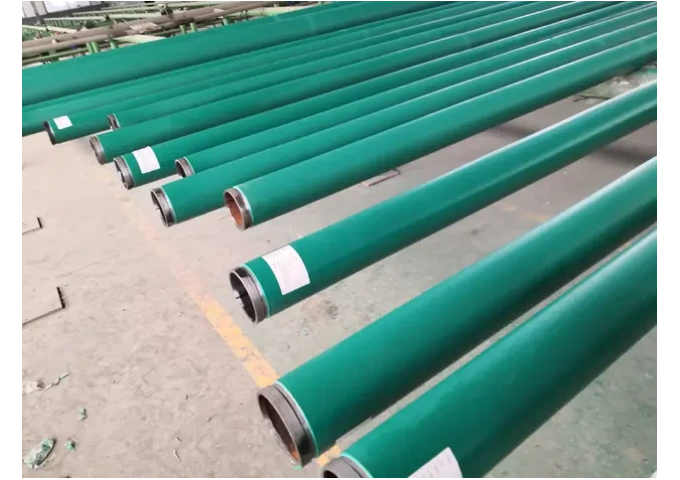
A finished groove may look simple, but good groove quality depends on careful preparation, correct setup, dimensional control, and proper inspection. Victaulic Cut Groove steel pipe can only perform as expected when the grooving process is handled correctly from the start. Even a high-quality coupling cannot fully compensate for a poorly prepared pipe end. At WEIHENG PIPE, we know customers need more than steel pipe alone. They need prepared products that support smooth installation, stable connection quality, and dependable field performance. This guide explains how to properly cut groove steel pipe step by step and why each checkpoint matters.
What to Check Before You Start Cut Grooving
Confirm the pipe specification first
Before grooving begins, the operator should confirm the basic pipe data. Pipe size, wall thickness, material type, and the required groove standard all affect the final result. A groove that is correct for one pipe may not be suitable for another, even when the outside diameter looks similar.
This is why pipe cut grooving should never begin with assumptions. If the wrong wall thickness or product type is used, the groove may not meet the intended connection requirements. Early confirmation helps avoid repeated work and keeps the process under control.
Inspect the pipe end condition
The pipe end should also be checked before machining. Squareness, burrs, dents, surface damage, and ovality all matter. If the pipe end is not square, the groove may not be uniform. If burrs remain after cutting, they may affect the groove surface and later coupling fit.
A quick inspection at this stage helps prevent avoidable problems later. Groove quality starts with the condition of the pipe itself.
Prepare the Right Tools and Work Area
Machine setup and support equipment
A stable setup is essential for consistent results. The grooving machine, pipe stand, alignment support, and measuring tools should all be ready before work begins. If lubrication or coolant is needed, it should also be prepared in advance.
The machine must be set correctly, and the pipe should be supported well enough to prevent movement during cutting. A poor setup often leads to vibration, uneven grooves, and inconsistent dimensions.
Safety and consistency on the jobsite
Safety and quality are closely connected. A pipe that shifts during machining is not only unsafe, but also likely to produce a poor groove. The operator should work in a stable position, and the pipe should remain securely supported throughout the process.
Consistency matters as much as safety. When the same setup is repeated correctly, the quality is easier to control from one pipe to the next.
Step 1 to Step 3 of the Cut Grooving Process
Step 1 — Measure and mark the pipe correctly
The first working step is to measure the pipe and mark it to the required length. This affects not only fabrication but also final installation. If the length is wrong before grooving begins, the error may not appear until field assembly, when correction is more costly.
Good measurement improves installation efficiency and reduces waste. On larger projects, accurate marking also helps maintain consistency across many prepared sections.
Step 2 — Make a square cut and clean the end
Once the pipe is marked, it should be cut squarely. A true square cut is important because an uneven end can lead to an uneven groove. After cutting, burrs should be removed and the pipe end should be cleaned.
This step helps create a stable and accurate surface for grooving. It also reduces the chance of later fit-up problems during grooved steel pipe installation.
Step 3 — Position and align the pipe in the machine
The pipe must be centered and aligned correctly before the groove is cut. Poor alignment can cause uneven groove depth, vibration, and dimensional inconsistency. Weak support can create the same problem.
This step should never be rushed. Proper positioning makes the cutting process smoother and helps produce a more even groove around the full circumference.
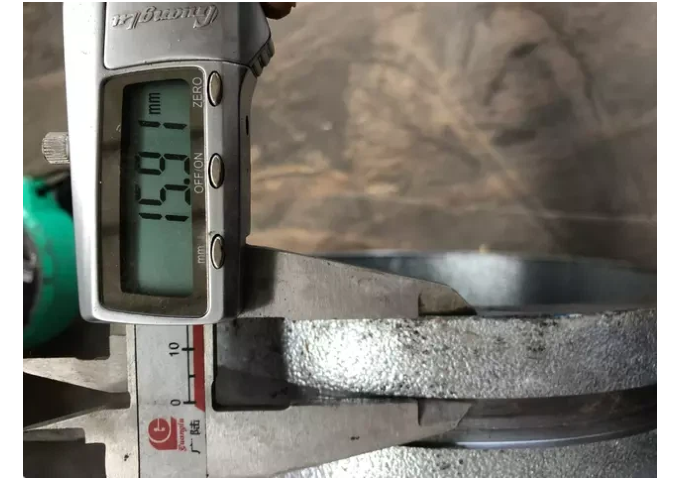
Step 4 to Step 6 of the Cut Grooving Process
Step 4 — Cut the groove to the required dimensions
After the pipe is prepared and aligned, the groove can be cut. At this point, the main focus is dimensional control. The groove should be cut to the required width, depth, and diameter range for the connection system being used.
The goal is not simply to finish the groove quickly. The goal is to create a groove that supports reliable coupling engagement and smooth installation.
Step 5 — Inspect the finished groove
Inspection should take place immediately after cutting. The groove should be checked visually and dimensionally. Operators should confirm that it is even around the circumference, that the end remains in good condition, and that no obvious defects are present.
Inspection is one of the most important quality steps in the entire process. A problem found here is much easier to correct than a problem discovered on site.
Step 6 — Protect the groove before installation
Once the groove is complete, it should be kept clean, dry, and protected from damage. A finished groove can still be harmed during handling, storage, or transport if the pipe end is not treated carefully.
This means protection is part of quality control. A well-cut groove only keeps its value if it reaches the installation stage in good condition.
Mistakes That Ruin a Good Groove
Common operator errors
Several basic mistakes can damage groove quality. Uneven support is one of the most common. Poor alignment, dull tooling, wrong machine settings, and weak inspection routines can also create problems. Another common issue is poor squareness at the pipe end before grooving begins.
These mistakes often happen when speed is given too much importance and process discipline is ignored. Good results depend on stable, repeatable working habits.
Why small errors become site problems later
A groove defect in the workshop often becomes an installation problem later. The coupling may be harder to fit, pipe sections may need adjustment, or the groove may be rejected altogether. In some cases, the result is wasted time and delayed project progress.
That is why small preparation errors should not be treated lightly. Minor workshop problems can become expensive field problems.
What Proper Cut Grooving Means for Project Performance
Better fit-up and smoother installation
When cut grooving is done correctly, installation becomes easier and more predictable. The coupling fits more smoothly, field adjustment is reduced, and the overall process moves more efficiently.
For contractors and project teams, this means less disruption and a cleaner workflow on site. Good groove quality supports better performance long after the pipe leaves the workshop.
Why buyers should care even if they do not machine pipe themselves
Many buyers do not perform the grooving process themselves, but they are still affected by the result. Fabrication quality becomes delivery quality. If the groove is poor, the customer faces the consequences during installation.
This is why product preparation matters. WEIHENG PIPE supplies steel pipe and related products with attention to consistency, practical performance, and application needs, helping customers reduce avoidable problems after delivery.
Cut Grooving Workflow and Quality Checkpoints
Step | What to Do | What to Check | Common Mistake to Avoid |
1 | Confirm pipe specification | Size, wall thickness, material, groove requirement | Starting without checking the pipe |
2 | Inspect pipe end condition | Squareness, burrs, damage, ovality | Ignoring end defects |
3 | Prepare machine and supports | Tool condition, alignment, pipe stability | Unstable setup |
4 | Measure and mark pipe | Finished length and marking accuracy | Wrong measurement |
5 | Cut and clean pipe end | Square cut and clean edge | Leaving burrs |
6 | Align and cut the groove | Groove consistency and dimensions | Poor centering |
7 | Inspect and protect groove | Uniformity, cleanliness, handling condition | Skipping inspection |
Conclusion
Proper cut grooving is not just about cutting a notch into the pipe. It is about controlling the whole preparation process so the finished product performs reliably during installation. When the pipe is checked, the machine is set correctly, the groove is cut accurately, and the finished end is protected, the result is a more dependable connection and fewer site problems. For customers who need reliable grooved steel pipe products supported by practical manufacturing knowledge, WEIHENG PIPE offers prepared solutions designed for smoother installation. Contact us to discuss your project requirements.
FAQ
1. Why is pipe end squareness important before cut grooving?
A square pipe end helps the groove form evenly. If the end is uneven, the final groove may also become uneven and affect coupling fit.
2. What is the most common mistake in the pipe cut grooving process?
Poor pipe support and alignment are among the most common problems. They often lead to inconsistent groove dimensions.
3. Should finished grooves always be inspected?
Yes. A groove may look clean but still have dimensional problems. Visual and dimensional checks are both important.
4. Why does proper cut grooving matter to buyers?
Because groove quality affects installation speed, coupling fit, and the chance of rework on site, even when the buyer does not perform the grooving directly.


