Industrial piping systems rely heavily on robust connections to maintain safe and efficient operations. Selecting the ideal material for these connections requires critical balancing. You must weigh initial material costs against long-term operational reliability. Over-specifying materials unnecessarily inflates project budgets. Conversely, under-specifying materials risks catastrophic system failure. It also invites severe non-compliance penalties from regulatory bodies. You need an objective evaluation of available materials. This careful evaluation builds highly resilient industrial piping systems.
This guide explores performance thresholds, compliance standards, and practical economics. We focus heavily on how different materials react to varied environmental stresses. You will gain a clear, actionable decision framework. This framework empowers procurement and engineering teams globally. It helps them select the most appropriate pipeline connection flange for highly specific applications. By understanding exact material limits, you optimize project investments. You also ensure maximum safety across your entire facility.
Key Takeaways
Carbon steel flanges provide high tensile strength and lower initial costs, ideal for high-heat, non-corrosive environments.
Stainless steel flanges offer superior corrosion resistance and longevity, making them mandatory for aggressive media, marine environments, and sanitary applications.
Mating dissimilar metals (carbon to stainless) introduces severe galvanic corrosion risks that require strict isolation protocols.
Final selection should be dictated by specific fluid media, operating temperatures, and ANSI B16.5 flange pressure-temperature ratings, rather than baseline unit cost.
Baseline Comparison: Material Properties and Economics
Defining the Carbon Steel Flange
A carbon steel flange consists primarily of iron and carbon. Manufacturers commonly produce them in standardized grades like ASTM A105. They also use A350 LF2 specifically for low-temperature applications. The high carbon and iron content yields exceptional mechanical strength. It also provides excellent fatigue resistance over extended time periods. Forging processes heavily influence the final product quality. Manufacturers heat the raw iron blocks to extreme temperatures. They then press the metal into specific die shapes. This forging process aligns the internal grain structure perfectly. It creates a highly durable part capable of withstanding massive internal forces. You will often see these parts utilized in downstream oil refineries.
This composition creates a distinct economic advantage. You benefit from significantly lower raw material costs. Manufacturing processes also require less specialized equipment. However, carbon alloys carry a clear, undeniable vulnerability. They suffer from rapid oxidation. Rust forms quickly without protective chemical barriers. You must apply robust industrial coatings. Otherwise, moisture exposure degrades the structural integrity rapidly.
Defining the Stainless Steel Flange
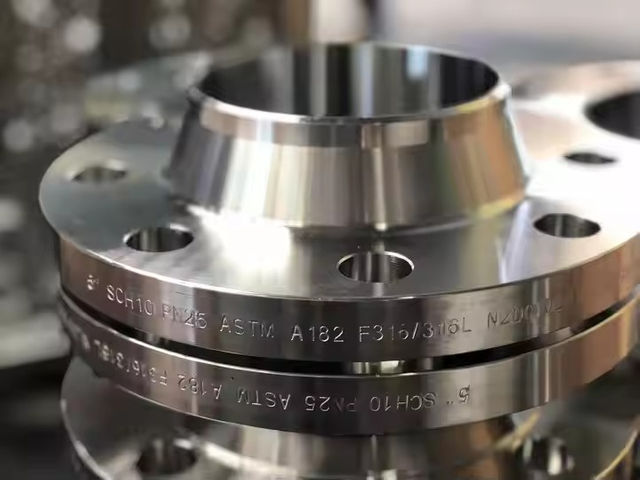
A stainless steel flange utilizes a highly specialized alloy mix. Common commercial grades include 304/304L and 316/316L. The "L" simply designates a lower carbon content variant. This lower carbon level significantly improves field welding characteristics. The critical differentiator is the high chromium content. These specific alloys contain a minimum of 10.5% chromium. This chemical addition creates a passive oxide layer. This microscopic layer coats the metal surface entirely. It effectively prevents rust and internal degradation.
The addition of nickel also plays a massive role in performance. Nickel stabilizes the austenitic structure of the metal base. This stabilization ensures the part remains tough at low temperatures. It actively prevents the material from fracturing under sudden physical impact. You must understand these microstructural differences to make informed procurement decisions. The economic reality involves higher initial capital expenditures. Raw materials and specialized machining drive these initial costs up. However, this higher upfront cost offsets future burdens. You gain zero-maintenance longevity. The material performs flawlessly even in the harshest environmental conditions.
Feature
Carbon Steel
Stainless Steel
Primary Alloy Elements
Iron, Carbon
Iron, Chromium, Nickel
Corrosion Resistance
Low (requires protective coatings)
Exceptionally High (passive oxide layer)
Initial Capital Cost
Low to Moderate
High
Maintenance Requirements
High (recoating, rust removal)
Extremely Low
Common Industrial Grades
ASTM A105, A350 LF2
304/304L, 316/316L
Core Evaluation Criteria for Your Piping System
Fluid Medium and Environmental Exposure
You must rigorously evaluate the exact chemical composition of the internal flow. Consider whether the pipeline fluid is highly acidic or alkaline. Assess if you are processing benign sweet gas or highly corrosive sour gas. You need a clear understanding of the internal chemical dynamics. Next, examine all external environmental risks carefully. Will the system face heavy offshore marine salinity? Are you dealing with buried pipelines in damp, highly acidic soil? Do you expose the joints to severe, fluctuating weather conditions?
A highly practical rule of thumb applies in these evaluation scenarios. Stainless materials are strictly required for corrosive internal media. They are also mandatory for highly saline external environments. Carbon alloys suffice perfectly well for benign media. This includes treated municipal water, standard crude oil, and dry natural gas. You simply need proper rust-inhibitive coatings applied externally. You must maintain these external coatings diligently throughout the system lifespan.
Temperature and Pressure Capabilities
Engineers must always reference standard pressure-temperature charts during the design phase. You will typically consult the precise parameters for an ANSI B16.5 flange. This engineering standard dictates safe operating limits across different pressure classes. Classes range from Class 150 up to Class 2500. A Class 150 rating does not mean the part holds exactly 150 psi. The actual pressure capacity changes depending on the operating temperature. For example, a part might hold 285 psi at room temperature. That same part might only hold 170 psi at severely elevated temperatures. You must cross-reference both temperature and pressure variables simultaneously.
Carbon alloys excel in high-temperature industrial processes. They maintain their shape under immense thermal stress. However, standard carbon becomes dangerously brittle at cryogenic temperatures. You must use specific low-temp grades like LF2 for extreme cold. Stainless materials offer significantly broader thermal versatility. They maintain structural integrity across extreme high heat. They also perform exceptionally well in deep cryogenic ranges. This makes them ideal for specialized liquid natural gas (LNG) processing.
Long-Term Financial Impact vs. Initial CapEx
You should closely model the long-term financial impact of potential operational downtime. Calculate the hidden expenses associated with regular system maintenance. Factor in the labor costs of premature part replacement. A cheaper initial material purchase often becomes a massive financial liability later. If your system requires frequent external recoating, labor expenses multiply quickly. Early physical replacements driven by environmental mismatch drain maintenance budgets rapidly.
You must actively balance the upfront capital expenditure against these recurring operational costs. Choosing cheaper materials often costs a facility much more over a ten-year cycle. You must look beyond the initial purchase order value. Smart engineering considers the entire operational lifecycle of the piping joint. Always justify your material choice using long-term reliability metrics rather than short-term savings.
Implementation Risks: Mating Carbon Steel to Stainless Steel
The Galvanic Corrosion Threat
Connecting dissimilar metals introduces severe chemical risks into your piping system. An aggressive electrochemical reaction occurs when carbon connects directly to stainless. This chemical reaction requires the physical presence of an electrolyte. Common industrial electrolytes include rainwater, condensation, or saline coastal humidity. Salt spray in marine environments acts as an incredibly potent electrolyte.
During this reaction, the carbon alloy acts as an active anode. The stainless alloy acts as a passive cathode. Consequently, the carbon anode corrodes at a highly accelerated rate. The stainless material remains relatively unaffected by the process. This rapid, localized degradation compromises the joint entirely. It ruins the mechanical integrity of the connection point. This degradation often leads to dangerous chemical leaks and total system pressure failures. You cannot ignore this fundamental law of chemistry.
Mitigation and Best Practices
You must avoid direct metal-to-metal contact at all costs. Proper electrical isolation is entirely non-negotiable for system safety. The best practice involves specifying proper Flange Isolation Kits (FIKs). You must install these kits correctly every single time.
Here are the critical components of a standard FIK:
Isolating central gaskets designed to separate the flange faces.
Full-length protective bolt sleeves to isolate the metal studs.
Specialized non-metallic dielectric washers for bolt heads.
High-strength steel backup washers to distribute clamping force evenly.
Watch out for very common installation mistakes. Technicians often over-tighten the securing bolts during assembly. You must strictly review torque specifications during installation. Excessive torque easily crushes the non-metallic isolation kits. This crushing action instantly destroys the required dielectric barrier. Once the dielectric barrier fails, galvanic corrosion begins immediately. Always use properly calibrated torque wrenches during final joint assembly.
Field Verification: Identifying Flange Materials On-Site
Visual and Physical Testing Limitations
Mixed inventory during installation poses a massive operational risk. You cannot reliably identify metals simply by looking at them. Visual inspections routinely fail on active, busy job sites. Dirt, grease, and ambient lighting obscure material surface finishes. Some field workers rely heavily on basic magnetic testing. Carbon alloys are strongly magnetic. Austenitic stainless alloys are generally non-magnetic in their raw, unprocessed form.
However, industrial manufacturing complicates this seemingly simple test. Cold working processes often introduce slight magnetism into austenitic materials. Heavy machining, drilling, and metal forming alter the internal grain structure. Therefore, magnetic testing remains a highly unreliable verification method. Relying on simple magnets can lead to catastrophic installation errors. You need foolproof methods to ensure absolute material accuracy.
Verification Protocols
You must implement strict, documented tracking protocols immediately. Rely exclusively on stamped heat numbers found physically on the parts. These physical numbers must perfectly match certified Material Test Reports (MTRs). MTRs provide the exact chemical breakdown of the specific metal batch. They serve as the definitive legal proof of material composition.
For compliance-critical systems, basic visual checks are entirely inadequate. You should use Positive Material Identification (PMI). Technicians perform PMI using handheld X-ray fluorescence (XRF) scanners. These specialized devices analyze the chemical composition instantly. They provide exact percentages of iron, chromium, and nickel on a digital screen. This scientific approach guarantees you install the correct material every time. It eliminates all dangerous guesswork from the critical construction phase.
Decision Framework: Shortlisting the Right Steel Flange
When to Specify Carbon Steel
Certain environments perfectly suit standard carbon materials. You should confidently specify them when operational conditions remain highly predictable.
Standard oil, gas, and petrochemical lines where exterior coatings are easily maintained.
Systems carrying benign, non-corrosive fluids like dry steam or chemically treated water.
Budget-constrained projects operating within highly predictable, dry, and thermally stable environments.
Structural support applications requiring extreme physical rigidity without severe chemical exposure risks.
When to Specify Stainless Steel
Aggressive environments strictly demand superior alloy performance. You must specify these resilient materials when system failure is simply not an option.
Pharmaceutical, food processing, or clean-water systems requiring strict, documented sanitary compliance.
Offshore platforms, marine vessels, or highly acidic chemical processing environments.
Applications demanding absolutely zero fluid contamination throughout the entire product lifecycle.
Remote facility installations requiring decades of completely maintenance-free service.
Next Steps
Follow a highly structured process to finalize your ultimate material selection. First, thoroughly audit your specific P&ID (Piping and Instrumentation Diagram) requirements. Map out exact fluid media characteristics and extreme thermal ranges. Second, consult directly with a certified industrial manufacturer. Ask them to verify standard compliance based strictly on your gathered data. Finally, request comprehensive comparative material quotes. Use these detailed quotes to guide your final financial decision.
Application Scenario
Recommended Material
Key Justification
High-pressure steam lines (dry)
Carbon Steel
Excellent high-heat strength and lower cost.
Offshore saltwater cooling systems
Stainless Steel (316L)
Molybdenum prevents chloride-induced pitting.
Food-grade beverage processing
Stainless Steel (304L)
Sanitary surface prevents bacterial growth.
Buried municipal water lines
Carbon Steel (Coated)
Cost-effective for large spans; coatings block soil moisture.
Conclusion
No single material works perfectly for every industrial piping system. Superiority depends entirely on your specific operational context and environmental variables. Proper material specification ensures basic physical safety and strict regulatory compliance. It also actively optimizes your overall project return on investment over decades. Always engage specialized engineering support early in the planning phase. Review all fluid chemical data before finalizing any purchase orders. Confirm system pressure ratings carefully before initiating complex procurement actions. Taking these steps guarantees a resilient, compliant, and cost-effective piping network.
FAQ
Q: Can an ANSI B16.5 flange be manufactured in both carbon and stainless steel?
A: Yes. The ANSI/ASME standard dictates physical dimensions and safe pressure classes, ranging from 150# to 2500#. It does not restrict the specific base material. Both carbon and stainless flanges adhere identically to these strict dimensional standards, ensuring universal fitment across global engineering projects.
Q: Is it safe to weld a stainless steel pipe to a carbon steel flange?
A: It requires highly specialized dissimilar metal welding procedures. Certified technicians typically use 309L filler wire to accomplish this safely. However, bolted connections using specialized dielectric isolation kits remain the vastly preferred industry standard. They offer much safer maintenance access and provide superior, long-lasting corrosion prevention.
Q: Why is 316L stainless steel preferred over 304 in marine environments?
A: 316L contains a significant chemical addition of molybdenum. This specific alloying element drastically increases the metal's resistance to aggressive, chloride-induced pitting. It also prevents crevice corrosion much more effectively than standard 304. This makes it absolutely essential for safe operation in highly saline marine conditions.
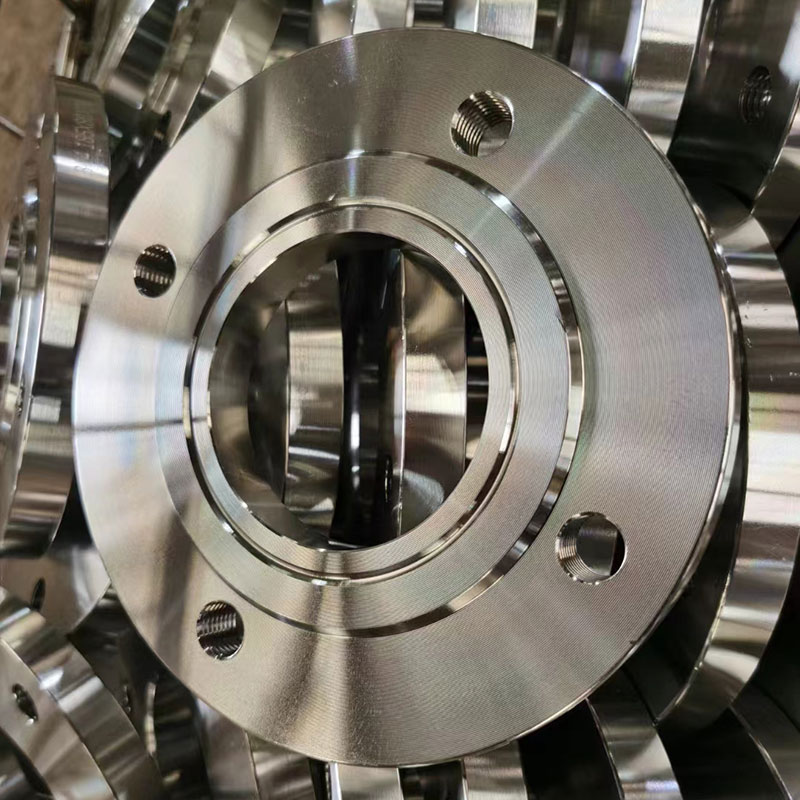
Our forged threaded flanges have undergone strict quality control and testing, with excellent strength and reliability, and can withstand high pressure and harsh working environments.
CONTACT US
Phone:+86-13832718182 Email: sales@czweiheng.com WhatsApp:+86-13832718182 Add:East of Construction Machinery Factory, Yanshan County, Cangzhou, Hebei China