You notice a clear difference between welded and seamless steel pipe when you look at their structure and manufacturing. Welded pipes use flat steel strips shaped into cylinders and joined by welding the seams. Seamless steel pipe forms from piercing a solid billet and has no welded seam. Buyers and industry professionals value these differences because welded pipes cost less and suit large projects, while seamless pipes offer higher pressure capacity and better durability.
Type of Pipe
Definition
Key Characteristics
Welded
Made by welding flat steel strips into a cylindrical shape.
Lower cost, less pressure resistance, wider dimensional tolerance (±0.15mm).
Seamless steel pipe
Formed by piercing a solid billet, no welded seam.
Stronger, more durable, tighter tolerance (±0.05mm), longer life.
Choosing the right pipe helps you match performance and budget to your project needs.
Key Takeaways
Welded pipes are made by joining flat steel strips, while seamless pipes are formed from solid billets, resulting in no seams.
Welded pipes are generally more cost-effective, making them suitable for large projects where budget is a concern.
Seamless pipes offer superior strength and durability, making them ideal for high-pressure and critical applications.
Welded pipes provide flexibility in size and shape, allowing for quick manufacturing and installation.
Seamless pipes have tighter dimensional tolerances, ensuring a precise fit for high-performance applications.
Consider the project requirements: use seamless pipes for high-pressure scenarios and welded pipes for general construction needs.
Quality control is crucial; choose suppliers like WEIHENG PIPE that ensure rigorous testing and compliance with industry standards.
Always match the pipe type to your specific project needs to ensure safety, performance, and cost-effectiveness.
Welded vs. Seamless: Key Differences
What Is Welded Pipe
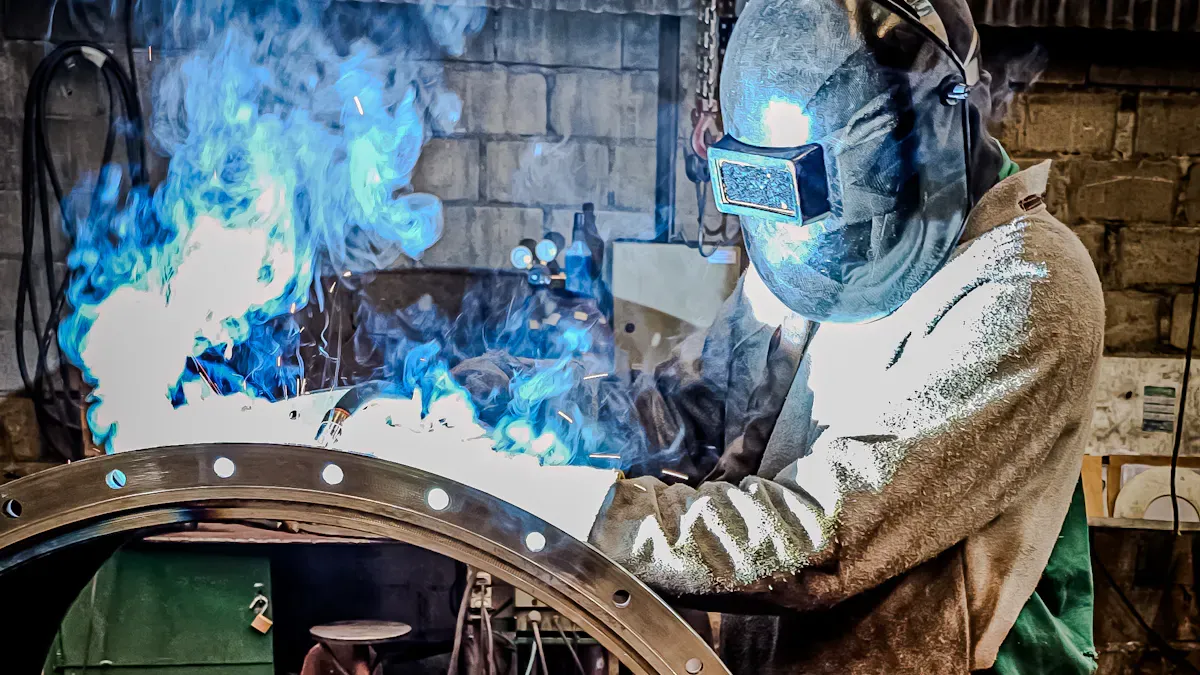
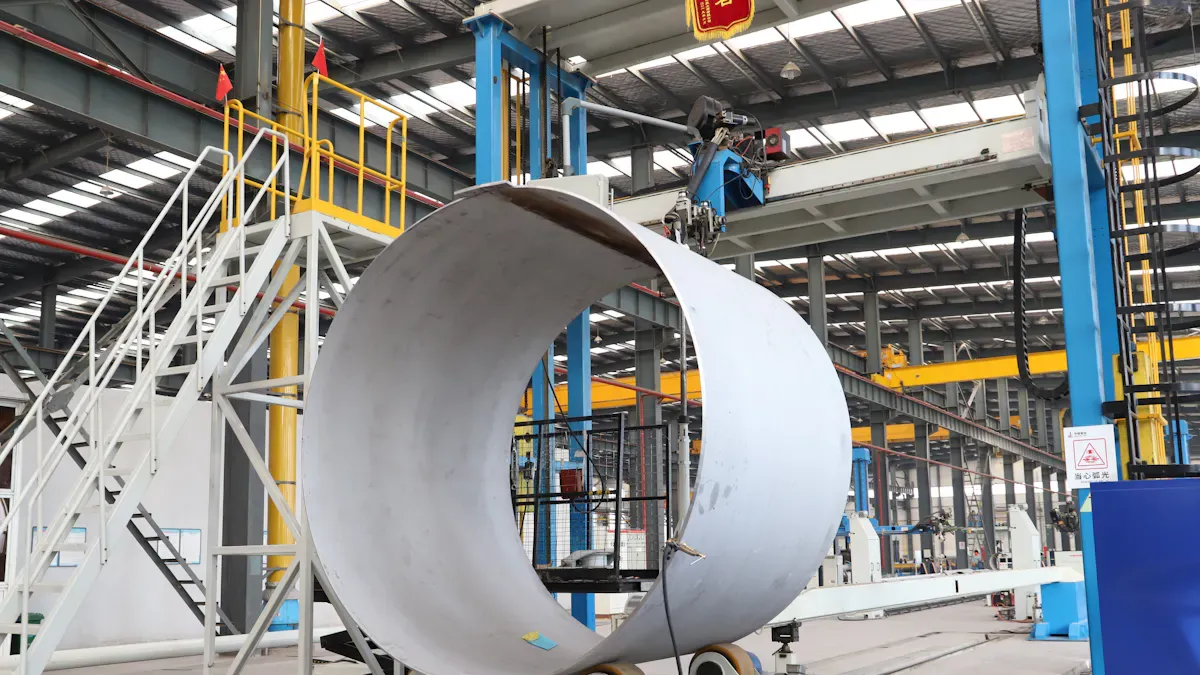
You see welded pipes in many industries. Manufacturers create welded pipes by rolling flat steel strips into a round shape and joining the edges with a weld. This process forms a visible seam along the length. You can choose welded pipes in a wide range of sizes and thicknesses. The production method allows for quick manufacturing and lower costs. Welded pipes work well for projects where high pressure is not the main concern. You often find welded pipes in construction, water supply, and automotive applications.
Welded pipes offer flexibility in size and shape, making them a popular choice for large-scale projects.
What Is Seamless Steel Pipe
Seamless steel pipe starts with a solid steel billet. Manufacturers heat the billet and pierce it to create a hollow tube. The process does not use any welding, so the pipe has no seam. You get a product with a uniform structure and consistent strength throughout. Seamless steel pipe handles high pressure and extreme conditions better than welded pipes. You often see seamless steel pipe used in oil and gas, power plants, and chemical industries.
Seamless steel pipe provides superior strength and reliability, especially for demanding environments.
Main Distinctions
When you compare welded vs. seamless, you notice clear differences in structure, strength, and cost. Welded pipes have a seam, while seamless steel pipe does not. This seam can affect the pipe's strength and performance. Seamless steel pipe offers a continuous and uniform composition, making it ideal for high-pressure applications.
Here is a table that shows the typical strength ratings and characteristics:
Pipe Type
Strength Rating
Characteristics
Seamless
Superior strength
Continuous and uniform composition, ideal for high-pressure applications
Welded
Generally less robust
More cost-effective, versatile in size and shape, improvements in welding techniques to minimize weaknesses along the seam
You pay less for welded pipes because the manufacturing process uses less energy and material. Welded pipes suit projects where budget matters more than maximum strength. Seamless steel pipe costs more, but you get higher durability and tighter dimensional tolerances.
Welded vs. seamless pipes differ in:
Structure: Welded pipes have a seam; seamless steel pipe does not.
Strength: Seamless steel pipe handles higher pressure and stress.
Cost: Welded pipes cost less and fit large projects; seamless steel pipe offers better performance for critical uses.
You need to consider these differences when choosing between welded vs. seamless. If your project requires high pressure or extreme durability, seamless steel pipe is the better option. If you want to save money and need pipes for general use, welded pipes make sense.
Welded Pipe Manufacturing
Materials and Preparation
You start with high-quality steel strips or plates when making welded tubing. These materials often come from carbon steel, stainless steel, or alloy steel. You must clean and inspect the steel to remove any rust, oil, or dirt. This step helps you avoid defects in the final welded tubing. You then cut the steel into the right width and length for the desired pipe size. Precise preparation ensures that the welded tubing will have consistent thickness and strength.
Tip: Clean materials lead to stronger welded tubing and fewer problems during production.
Welding Methods
You can use different welding methods to create welded tubing. Each method offers unique benefits for certain applications.
ERW Process
The Electric Resistance Welding (ERW) process is one of the most common ways to make welded tubing. You feed the steel strip through rollers that shape it into a round tube. The edges touch and heat up from electric current. The heat melts the edges, and pressure joins them together. This process creates a strong seam along the length of the welded tubing. ERW welded tubing works well for water lines, scaffolding, and automotive parts.
Spiral Welding
Spiral welding uses a different approach. You wind the steel strip in a spiral shape, like a roll of tape. As you form the spiral, you weld the edges together. This method lets you make larger diameter welded tubing. Spiral welded tubing is often used for pipelines that carry water, oil, or gas over long distances. You get flexibility in length and diameter with this method.
You must check every piece of welded tubing for quality. Inspections include visual checks for surface defects and measurements for thickness and diameter. You also test the welded seam for strength and leaks. Some factories use ultrasonic or X-ray tests to find hidden flaws. Quality control ensures that welded tubing meets industry standards and performs well in real-world use.
Note: Reliable welded tubing comes from strict quality checks at every stage.
Seamless Steel Pipe Manufacturing
Materials and Preparation
You begin the process of making seamless tubing with a solid steel billet. Manufacturers select high-quality steel for seamless tubing because the final product must handle high pressure and critical applications. You often see carbon steel, alloy steel, or stainless steel used for seamless tubing. These materials provide strength and durability. You heat the billet to a high temperature to make it easier to shape. This step prepares the billet for piercing and extrusion. Clean and uniform billets help you achieve consistent wall thickness in seamless tubing. You avoid defects by inspecting the billet before processing. The absence of weld lines in seamless tubing means you get a product that can withstand demanding environments. You rely on seamless tubing for oil and gas exploration, power plants, and infrastructure projects because it offers superior reliability.
Tip: Always choose seamless tubing made from high-quality steel for projects that require strength and long-term performance.
Piercing and Extrusion
You move to the piercing stage after preparing the billet. The piercing process transforms the solid billet into seamless tubing. You heat the billet until it becomes pliable. Then, you pierce the center using a rotary piercing mill. This creates a hollow shell, which forms the base of seamless tubing. You roll the shell to elongate it and adjust the thickness and diameter. Rolling mills, such as mandrel mills and plug mills, help you achieve the desired size for seamless tubing. You insert a mandrel bar into the tube and roll it until you reach the correct dimensions. Sizing mills further refine the seamless tubing to meet precise tolerances. You apply heat treatment, such as annealing or quenching, to enhance mechanical properties. Finishing steps include cutting, straightening, and inspecting the seamless tubing.
Step
Process
Description
1
Heating of the Billet
You heat a solid round steel billet at a high temperature to make it pliable.
2
Piercing
You pierce the billet through the center using a piercer, creating a hollow shell for seamless tubing.
3
Rolling
You elongate and roll the hollow shell to achieve the desired thickness and diameter for seamless tubing.
4
Sizing
You process the tube further to achieve precise size and tolerances for seamless tubing.
5
Heat Treatment
You subject the pipe to heat treatment to achieve desired mechanical properties.
6
Finishing
You cut, straighten, inspect, and sometimes machine the seamless tubing for final use.
You depend on seamless tubing for high-pressure scenarios because the continuous wall structure increases strength and reliability. The absence of weld defects in seamless tubing gives it a pressure-bearing capacity that is 15-20% higher than welded pipes.
Hot vs. Cold Drawing
You can produce seamless tubing using hot drawing or cold drawing methods. Hot drawing involves heating the steel above its recrystallization point. You shape the seamless tubing while it is hot, which allows you to create larger dimensions and thicker walls. Hot drawing gives seamless tubing a rougher surface finish and lower strength compared to cold drawing. Cold drawing takes place at room temperature or below the recrystallization point. You pull the seamless tubing through dies to achieve a smoother surface and higher strength. Cold drawing increases precision and allows you to make seamless tubing with smaller dimensions and thinner walls. You pay more for cold drawn seamless tubing because the process requires more steps and tighter controls.
Feature
Hot Rolling
Cold Rolling
Temperature
Heated above recrystallization point
Room temperature or below recrystallization point
Surface Finish
Rougher
Smoother
Strength
Lower strength
Higher strength due to work hardening
Cost
Lower cost
Higher cost
Precision
Less precise
More precise
Size
Larger dimensions, thicker walls
Smaller dimensions, thinner walls
You select hot drawn seamless tubing for projects that need large pipes and thick walls. You choose cold drawn seamless tubing when you require high precision, smooth surfaces, and greater strength. Both methods produce seamless tubing that meets strict industry standards. You trust seamless tubing for critical uses because it offers uniform structure and reliable performance.
Quality Control
You rely on strict quality control to ensure seamless steel pipes meet high standards. Quality control starts with material selection. Manufacturers choose steel billets that match precise chemical composition requirements. You see experts inspect billets for uniformity and purity before production begins.
During manufacturing, you monitor key parameters like temperature and size. This helps you maintain consistency in wall thickness and diameter. You check each step to prevent defects and guarantee stable production.
You use non-destructive testing methods to find hidden flaws. Ultrasonic testing sends sound waves through the pipe to detect cracks or voids. Magnetic particle testing highlights surface and near-surface defects. These tests help you confirm the integrity of seamless steel pipes without damaging them.
Mechanical property testing measures tensile strength and yield strength. You pull samples to see how much force they withstand. This ensures seamless pipes perform well under pressure and stress.
Surface treatment plays a vital role. You inspect pipes for scratches, pits, or other imperfections. Pickling removes surface impurities and improves corrosion resistance. You want pipes with smooth, clean surfaces for reliable performance.
Size inspection checks diameter and wall thickness. You use precise instruments to measure each pipe. Pipes must meet strict dimensional tolerances to fit industry standards.
You manage every production step carefully. Process management keeps manufacturing stable and reliable. You track each batch and record data to spot trends or issues early.
Metallographic structure testing uses microscopes to examine the steel’s internal structure. You look for microscopic defects that could affect strength or durability. This step helps you guarantee seamless pipes have a uniform and robust composition.
Here is a summary of quality control steps in seamless steel pipe manufacturing:
Material control: Select high-quality billets and check chemical composition.
Production process control: Monitor temperature and size during manufacturing.
Non-destructive testing: Use ultrasonic and magnetic particle tests to find defects.
Mechanical property testing: Measure tensile and yield strength.
Surface treatment: Inspect for defects and apply pickling.
Size inspection: Measure diameter and wall thickness.
Production process management: Control each step for stability.
Metallographic structure testing: Examine microscopic structure for hidden flaws.
Quality control ensures you receive seamless steel pipes that deliver strength, reliability, and long service life.
Welded vs. Seamless: Properties Compared
Strength and Durability
When you compare welded and seamless steel pipes, strength and durability stand out as key differences. Seamless pipes usually offer higher strength because they do not have a welded seam. The absence of a seam means you get a pipe with a uniform structure, which helps it handle more stress and pressure. According to ASTM and ISO standards, seamless steel pipes show yield strengths from 235 MPa to 460 MPa and tensile strengths from 370 MPa to 700 MPa. Welded pipes, such as those made by the ERW process, have minimum yield strengths around 240 MPa and minimum tensile strengths of 415 MPa. Seamless pipes often exceed these values, making them a better choice for demanding applications.
Pipe Type
Minimum Yield Strength
Minimum Tensile Strength
Type E (ERW)
240 MPa (35,000 psi)
415 MPa (60,000 psi)
Type S (Seamless)
Higher than Type E
Higher than Type E
You should choose seamless pipes when your project requires maximum durability and strength. Welded pipes work well for less critical uses, where cost and availability matter more than ultimate strength.
Tip: For projects that demand high performance and long service life, seamless pipes from WEIHENG PIPE deliver reliable results.
Corrosion Resistance
Corrosion resistance plays a big role in how long your pipes last, especially in harsh environments. Seamless pipes give you several advantages:
You get higher strength and durability, which helps the pipe resist corrosion over time.
The lack of a welded seam means fewer weak points where corrosion can start.
Seamless pipes work best in critical applications, such as chemical plants or offshore oil rigs, where harsh conditions are common.
Welded pipes also perform well in many industries. You can use them with aggressive substances, and they still provide reliable performance in corrosive environments. The choice of corrosion-resistant materials further improves the lifespan of both welded and seamless pipes.
Note: Always consider the environment and the type of fluid or gas moving through your pipes. Seamless pipes offer better protection in extreme conditions, but welded pipes can meet your needs in many standard applications.
Pressure Ratings
Pressure rating tells you how much internal pressure a pipe can safely handle. Seamless pipes usually have higher pressure ratings because their uniform structure has no seam that could become a weak spot. Welded pipes have improved over the years, but the seam can still limit their pressure capacity in some cases.
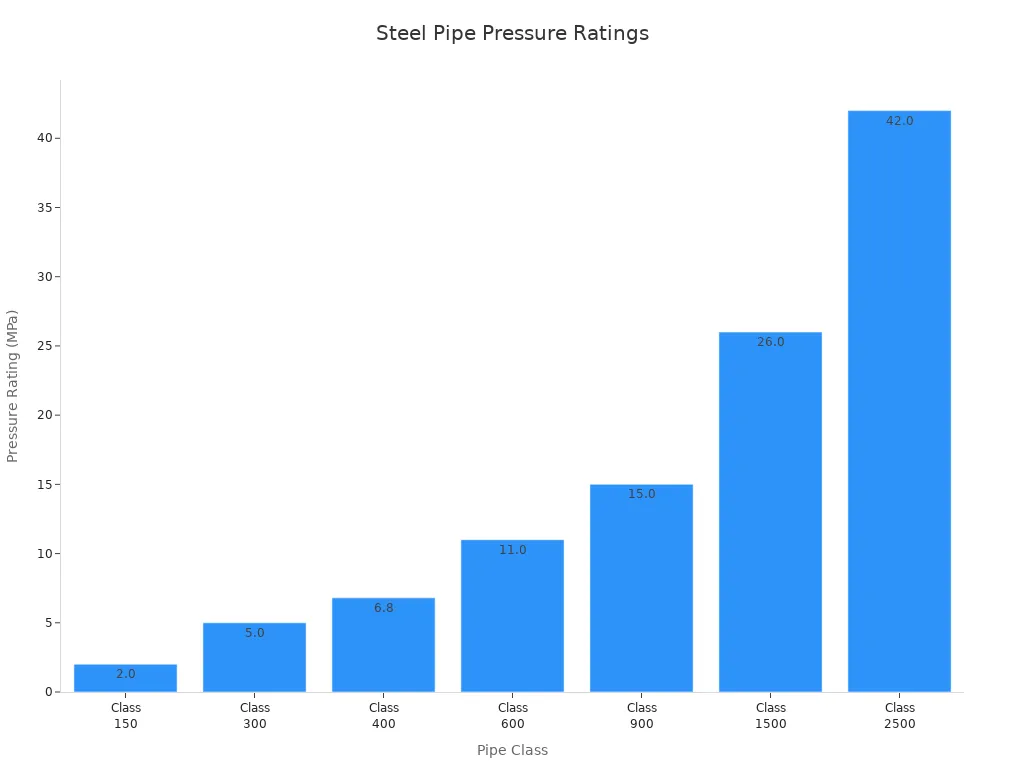
Here is a table showing standard pressure ratings for steel pipes used in oil and gas industries:
Class
Pressure Rating (MPa)
Class 150
2.0
Class 300
5.0
Class 400
6.8
Class 600
11.0
Class 900
15.0
Class 1500
26.0
Class 2500
42.0
You can see that higher classes support much greater pressures. Seamless pipes often serve in the highest pressure classes, especially in oil, gas, and power industries.
When you need pipes for high-pressure systems, seamless pipes from WEIHENG PIPE give you peace of mind. Welded pipes remain a cost-effective choice for lower-pressure applications.
Dimensional Accuracy
You need to consider dimensional accuracy when you select steel pipes for your project. Dimensional accuracy refers to how closely the pipe matches its specified measurements, such as diameter and wall thickness. This property affects how well pipes fit together and how they perform under pressure.
Seamless pipes usually offer tighter dimensional tolerances than welded pipes. You get more precise measurements with seamless pipes, especially when you choose cold-drawn seamless types. Welded pipes, on the other hand, often provide more consistent wall thickness along their length. However, they may not match the tight tolerances of seamless pipes.
Here is a comparison of typical dimensional tolerances:
Pipe Type
Dimensional Tolerance
Cold-drawn Seamless
±0.05mm
Welded Steel
±0.15mm
Seamless pipes give you tighter dimensional tolerances.
Welded pipes deliver more uniform wall thickness.
You should choose seamless pipes when your project requires high precision, such as in hydraulic systems or high-pressure applications. Welded pipes work well for general construction or water supply, where small variations in size do not cause problems.
Surface Finish
Surface finish describes how smooth or uniform the outside and inside of a pipe feels and looks. This property matters because it affects corrosion resistance, flow efficiency, and how easy it is to coat or paint the pipe.
Welded pipes usually have a better surface finish. The manufacturing process gives welded pipes a more uniform wall thickness and better circularity. You often see smoother surfaces on welded pipes, which makes them easier to use in visible or decorative applications.
Seamless pipes may show some eccentricity, or unevenness, because of the extrusion process. This can affect the smoothness of the pipe’s surface, especially on the inside. You might notice slight variations in thickness or roundness with seamless pipes.
Here is a table comparing surface finish characteristics:
Pipe Type
Surface Finish Characteristics
Welded Pipe
Generally has a better surface finish due to uniform wall thickness and better circularity.
Seamless Pipe
May exhibit eccentricity due to the extrusion process, affecting surface smoothness.
You should select welded pipes when you need a smooth, uniform appearance or when you plan to apply coatings. Seamless pipes still perform well in demanding environments, but you may need to consider the surface finish if your project has strict requirements.
Cost and Value
Manufacturing Costs
You need to understand what drives the cost of steel pipes before making a decision. Several factors influence how much you pay for welded and seamless pipes. The table below shows the main elements that affect manufacturing costs:
Factor
Description
Raw Material Costs
Prices of steel and alloys change based on global supply, demand, and mining output.
Energy Expenses
Pipe production uses a lot of energy, so electricity and fuel prices matter.
Supply Chain Disruptions
Shipping delays, shortages, and logistics problems can raise costs.
Demand Fluctuations
High demand in construction or oil and gas can push prices up, while slowdowns can lower them.
Regulatory Impacts
Government rules, environmental laws, and tariffs can increase costs or limit supply.
Welded pipes usually cost less to make. The process uses flat steel strips and simpler machinery. Seamless pipes need more steps, like piercing and rolling a solid billet, which takes more energy and time. This extra work makes seamless pipes more expensive to produce.
Tip: If you want to keep your project within budget, pay close attention to these cost factors when choosing your pipe type.
Market Price Differences
You will notice that market prices for welded and seamless pipes do not stay the same. Many things can cause prices to change quickly:
Raw material prices go up and down based on global supply and demand.
Seamless pipes cost more because their manufacturing process is more complex.
Supply chain issues, such as shipping delays or shortages, can make prices jump.
Demand from industries like construction or oil and gas can cause sudden price changes.
Economic downturns usually lower prices, while booms push them higher.
Government rules and tariffs can add extra costs or limit how much pipe is available.
You should always check current market trends before buying. This helps you avoid surprises and plan your budget better.
When Welded Is More Cost-Effective
Welded pipes often give you the best value for your money, especially if you have a tight budget. Their simpler production process and lower material needs make them more affordable than seamless pipes. The table below highlights when welded pipes are the smarter choice:
Pipe Type
Cost-Effectiveness
Welded Pipes
More cost-effective due to simpler production. Ideal for projects with budget limits.
Seamless Pipes
Higher costs justified by strength and performance in critical uses.
You should pick welded pipes for projects where cost matters most. These include construction, water supply, and general industrial uses. Welded pipes work well when you do not need the extra strength or pressure rating of seamless pipes.
When Seamless Pipes Are Worth the Cost
You may wonder why seamless pipes cost more than welded pipes. The answer lies in their performance and reliability. Seamless pipes offer unmatched strength and durability. You get pipes that handle high pressure, extreme temperatures, and harsh chemicals. These features make seamless pipes the best choice for critical projects.
You see seamless pipes used in industries where failure is not an option. Here are some examples:
Oil and gas
Petrochemical
Power generation
Aerospace
These industries demand pipes that last for decades. You cannot risk leaks or bursts. Seamless pipes give you peace of mind because they have no weak seams. You get a uniform structure that stands up to tough conditions.
Seamless pipes may cost more at first, but you save money over time. Facilities that use seamless pipes report maintenance cost reductions of 15 to 20 percent over ten years compared to welded pipes. You spend less on repairs and replacements. You avoid downtime and keep your operations running smoothly.
You also see seamless pipes as an investment. The global seamless pipe market is projected to reach about $94.37 billion by 2030. The market grows at a compound annual growth rate of 5.5% from 2022 to 2030. This growth shows that more industries trust seamless pipes for their most demanding needs.
Here is a table that shows when seamless pipes are worth the extra cost:
Project Type
Why Choose Seamless Pipes
Oil and Gas
High pressure, safety, long-term savings
Petrochemical
Chemical resistance, reliability
Power Generation
Extreme heat, durability
Aerospace
Precision, strength, safety
Tip: If your project involves high pressure, corrosive materials, or strict safety standards, seamless pipes are the smart choice.
You want pipes that deliver performance and value. WEIHENG PIPE offers seamless steel pipes that meet global standards. You get products that pass rigorous quality checks. You can trust WEIHENG PIPE for your critical projects. Explore their seamless pipe solutions at https://www.czwhsteel.com/.
You make the right decision when you choose seamless pipes for demanding applications. You protect your investment and ensure long-term success.
Benefits of Welded Pipes
Key Advantages
You gain several advantages when you choose welded steel pipes for your project. These pipes offer cost-effectiveness and flexibility, making them ideal for large-scale or non-critical applications. You benefit from faster production and installation processes. Welded pipes can be manufactured quickly, which helps you meet tight project deadlines. You also reduce labor costs during installation because the process is less intensive. The uniform thickness and smooth surfaces of welded steel pipes simplify fabrication and enhance flow efficiency. You find these pipes easy to handle and install, which saves you time and money.
Faster production and installation
Lower labor costs
Suitable for projects with tight schedules
Easy fabrication and smooth surfaces
Welded steel pipes help you complete projects efficiently and stay within budget.
Best Applications
Welded steel pipes serve many industries. You see them used in construction, water and gas systems, and automotive manufacturing. Their versatility and reliability make them a top choice for a wide range of uses.
Industry
Use of Welded Steel Pipes
Oil and Gas
Transporting crude oil, natural gas, and refined petroleum products due to high pressure and corrosion resistance.
Construction and Infrastructure
Structural support, underground utility systems, and water supply networks ensuring safety and integrity.
Water Supply and Sewage
Corrosion resistance and leak-proof joints for efficient flow of water and wastewater.
Power Generation
Cooling systems and steam distribution in thermal, nuclear, and renewable plants due to high temperature tolerance.
Automotive and Transportation
Applications in exhaust systems, chassis components, and fuel delivery systems, showcasing versatility.
Construction
You rely on welded steel pipes for structural support and underground utility systems. These pipes provide strength and stability for buildings, bridges, and infrastructure projects. Their cost-effectiveness allows you to use them in large quantities without exceeding your budget.
Water and Gas
You use welded pipes in water supply networks and gas distribution systems. Their corrosion resistance and leak-proof joints ensure safe and efficient flow. You find them easy to install and maintain, which makes them ideal for municipal and industrial projects.
Automotive
You see welded steel pipes in automotive applications such as exhaust systems, chassis components, and fuel delivery systems. Their versatility and uniformity help you meet strict manufacturing standards. You benefit from reliable performance and easy integration into vehicle designs.
Why Choose WEIHENG PIPE Welded Products
You want welded steel pipes that deliver quality and value. WEIHENG PIPE offers a wide range of welded products designed for efficiency and reliability. You can trust their pipes for construction, water and gas, and automotive projects. Their manufacturing process ensures uniform thickness, smooth surfaces, and strong joints. You save time and money with their fast production and easy installation. For dependable welded steel pipes, visit https://www.czwhsteel.com/. You get expert support and a product that meets your project needs.
Choose WEIHENG PIPE welded products for cost-effective solutions and proven performance.
Benefits of Seamless Steel Pipes
Key Advantages
You gain several important benefits when you choose seamless steel pipes for your projects. These pipes stand out because of their unique structure and performance. Here are the main advantages you can expect:
Seamless steel pipes have a completely homogenous structure, which gives them greater strength.
You get superior corrosion resistance, making these pipes last longer in harsh environments.
Seamless steel pipes can handle higher pressure, so they are ideal for critical and high-pressure applications.
The absence of a welded seam means fewer weak points, which increases reliability and safety.
You benefit from tighter dimensional tolerances, which helps in projects that require precision.
Seamless steel pipes give you peace of mind when you need strength, durability, and top performance.
Best Applications
Seamless steel pipes serve many industries that demand reliability and high standards. You often see these pipes in places where failure is not an option.
Industry/Application
Description
Oil and Gas Industry
Used for oil casing and tubing in extraction and transmission due to strength and corrosion resistance.
Commonly used as heat exchangers in power plants and waste incineration.
Construction
Applied in water supply, drainage, and as structural supports due to durability.
Automotive, Aerospace, Transportation
Used in various applications requiring high pressure and temperature resistance.
Food and Beverage Processing
Employed for transporting liquids and gases, valued for corrosion resistance and ease of cleaning.
Oil and Gas
You rely on seamless steel pipes in the oil and gas industry for extraction and transmission. These pipes resist corrosion and withstand tough conditions underground and offshore. Their strength and reliability make them the top choice for oil casing and tubing.
High-Pressure Systems
You need seamless steel pipes for high-pressure applications. These pipes perform well in systems that move steam, gas, or chemicals at high pressures. Their uniform structure helps prevent leaks and failures, which keeps your operations safe.
Power and Chemical
You find seamless steel pipes in power plants and chemical factories. These industries use the pipes in boilers, heat exchangers, and piping systems that face extreme temperatures and aggressive chemicals. The pipes’ durability and resistance to corrosion help you avoid costly downtime.
Why Choose WEIHENG PIPE Seamless Products
You want seamless steel pipes that meet strict quality standards and deliver long-term value. WEIHENG PIPE offers seamless products that pass rigorous testing for strength, pressure resistance, and corrosion protection. Their seamless steel pipes support your most demanding projects, from oil and gas to power generation and chemical processing. You can explore their full range of seamless steel pipes at https://www.czwhsteel.com/.
Choose WEIHENG PIPE seamless steel pipes for unmatched strength, reliability, and performance in every critical application.
Choosing the Right Pipe
Project Requirements
You need to match the pipe type to your project’s specific needs. Start by considering the pressure rating, the transmission medium, and your budget. Seamless steel pipes work best for projects that demand ultra-high pressure, such as oil and gas transportation or high-pressure boiler tubes. These pipes also handle corrosive or radioactive materials safely. Welded pipes suit projects with low to medium pressure, like building structure supports or water supply lines. You can use welded pipes for ordinary fluid transmission and budget-sensitive projects.
Here is a table to help you compare the main criteria:
Criteria
Seamless Steel Pipes
Welded Steel Pipes
Pressure Rating
Suitable for ultra-high pressure (≥10MPa)
Suitable for low-medium pressure (≤4MPa)
Transmission Medium
Preferred for corrosive, radioactive, or high-pressure media
Sufficient for ordinary medium transmission
Project Scale and Cost Budget
Higher cost, suitable for small batch, high-value projects
Lower cost, ideal for large-scale, budget-sensitive projects
You should review your project’s requirements before making a decision. If you need pipes for petroleum and natural gas transportation, precision instrument manufacturing, or high-pressure systems, seamless pipes are the right choice. For building supports, low-pressure fluid transport, or large-scale projects, welded pipes offer the best value.
Tip: Always assess your project’s demands for pressure, medium, and budget to select the most suitable pipe.
Industry Standards
You must follow industry standards to ensure safety and performance. Standards set by organizations like ASTM, ISO, and API define the minimum requirements for steel pipes. These standards cover aspects such as material quality, wall thickness, diameter, and pressure ratings. Seamless pipes often meet stricter standards for high-pressure and critical applications. Welded pipes comply with standards for general construction, water supply, and automotive uses.
You should check the relevant standards for your industry. For example, oil and gas projects require pipes that meet API specifications. Construction projects use pipes that follow ASTM or ISO guidelines. Meeting these standards helps you avoid problems and ensures your pipes perform as expected.
Note: Always verify that your chosen pipes meet the necessary industry standards for your application.
Expert Consultation
You benefit from expert advice when choosing between welded and seamless pipes. Specialists can help you evaluate your project’s requirements, review industry standards, and recommend the best solution. You save time and avoid costly mistakes by consulting professionals.
WEIHENG PIPE offers expert consultation and a wide range of steel pipe products. Their team helps you select the right pipe for your project, whether you need welded pipes for large-scale construction or seamless pipes for high-pressure systems.
Seamless steel pipes are preferred for:
Petroleum and natural gas transportation
High-pressure boiler tubes
Precision instrument manufacturing
Welded steel pipes are recommended for:
Building structure supports
Low-pressure fluid transportation
Budget-sensitive projects
For expert guidance and reliable products, reach out to WEIHENG PIPE. Their experience ensures you get the right pipe for every application.
The WEIHENG PIPE Advantage
When you choose a steel pipe supplier, you want more than just a product. You want a partner who understands your needs and delivers reliable solutions. WEIHENG PIPE stands out as a trusted leader in the steel pipe industry. You benefit from their commitment to quality, innovation, and customer satisfaction.
Why should you choose WEIHENG PIPE for your next project?
Comprehensive Product Range: You find both welded and seamless steel pipes in many sizes, grades, and specifications. This variety lets you match the right pipe to your project, whether you need high-pressure seamless pipes or cost-effective welded options.
Strict Quality Control: You receive pipes that meet or exceed international standards. WEIHENG PIPE uses advanced testing methods, including ultrasonic and X-ray inspections, to ensure every pipe is strong and defect-free.
Technical Expertise: You get support from a team with years of experience in steel pipe manufacturing. Their experts help you select the best pipe for your application, answer technical questions, and provide guidance throughout your project.
Fast and Reliable Delivery: You can count on timely shipments. WEIHENG PIPE manages logistics efficiently, so your materials arrive when you need them. This helps you keep your project on schedule.
Customer-Focused Service: You enjoy clear communication and responsive support. The team listens to your requirements and offers solutions tailored to your goals.
Tip: When you work with WEIHENG PIPE, you gain a partner who values your success as much as you do.
WEIHENG PIPE Benefits
What You Get
Wide Product Selection
Pipes for every industry and project
Quality Assurance
Reliable, tested, and certified pipes
Expert Consultation
Guidance from experienced professionals
On-Time Delivery
Materials when and where you need them
Responsive Support
Answers and help at every step
Common Myths About Welded and Seamless Pipes
You may hear many things about steel pipes that are not true. These myths can make it hard to choose the right pipe for your project. Let’s clear up some common misunderstandings.
Strength Misconceptions
Many people believe that seamless pipes are always much stronger than welded pipes. This is not always the case. You get high strength from seamless pipes because they have no seam, but modern welded pipes also offer impressive strength. Advances in welding technology have made the seam almost as strong as the rest of the pipe. You can use welded pipes for many structural and pressure applications without worry. The key is to match the pipe type to your project’s needs and follow industry standards.
Remember: Both types can be strong if you choose the right grade and manufacturer.
Cost and Quality Myths
You might think that higher cost always means better quality. This is not true for steel pipes. Seamless pipes usually cost more because their manufacturing process is complex. However, you do not always need to pay extra for seamless pipes. Welded pipes can give you excellent quality at a lower price, especially for large projects. You should look at your project’s requirements and not just the price tag. Quality depends on the materials, production process, and the supplier you choose.
Myth
Reality
Expensive = Better
Quality depends on standards and supplier, not just price.
Cheap = Low Quality
Welded pipes can be high quality and cost-effective.
Some people say you must use seamless pipes for every high-pressure or critical job. This is not true. You can use welded pipes in many demanding applications if they meet the right standards. For example, water supply, construction, and automotive industries often use welded pipes with great results. You should check the pressure rating, material, and certification before making your choice. Seamless pipes work best for extreme conditions, but welded pipes are suitable for many everyday uses.
Use seamless pipes for:
High-pressure oil and gas lines
Chemical processing
Power plants
Use welded pipes for:
Building structures
Water and gas supply
Automotive parts
You now understand the key differences between welded and seamless steel pipes. Welded pipes offer cost savings and flexibility. Seamless pipes deliver superior strength and reliability. You should always match your choice to your project’s needs.
Our forged threaded flanges have undergone strict quality control and testing, with excellent strength and reliability, and can withstand high pressure and harsh working environments.
CONTACT US
Phone:+86-13832718182 Email: sales@czweiheng.com WhatsApp:+86-13832718182 Add:East of Construction Machinery Factory, Yanshan County, Cangzhou, Hebei China